2026-07-10
What Is Indonesia Actually Famous For? A Local Guide's Answer
A Javanese guide's honest answer: the islands, the volcanoes, the food, the batik, and why the country's biggest monument sits nowhere near the island you have heard of.
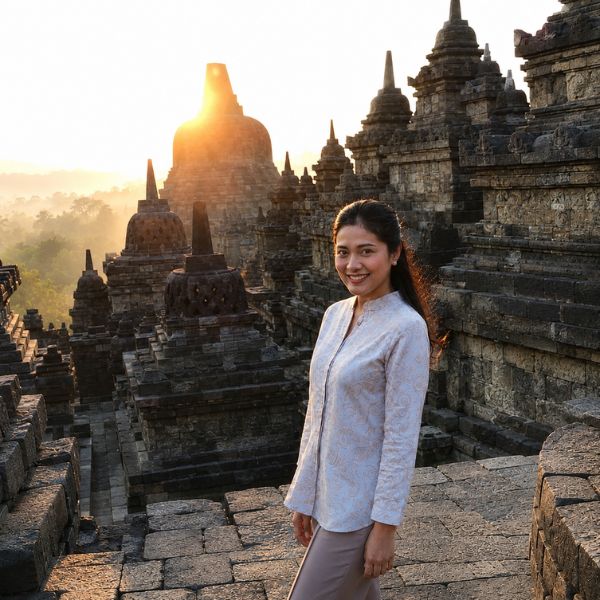 By Dewi Lestari, Borobudur temple tour guide since 2022
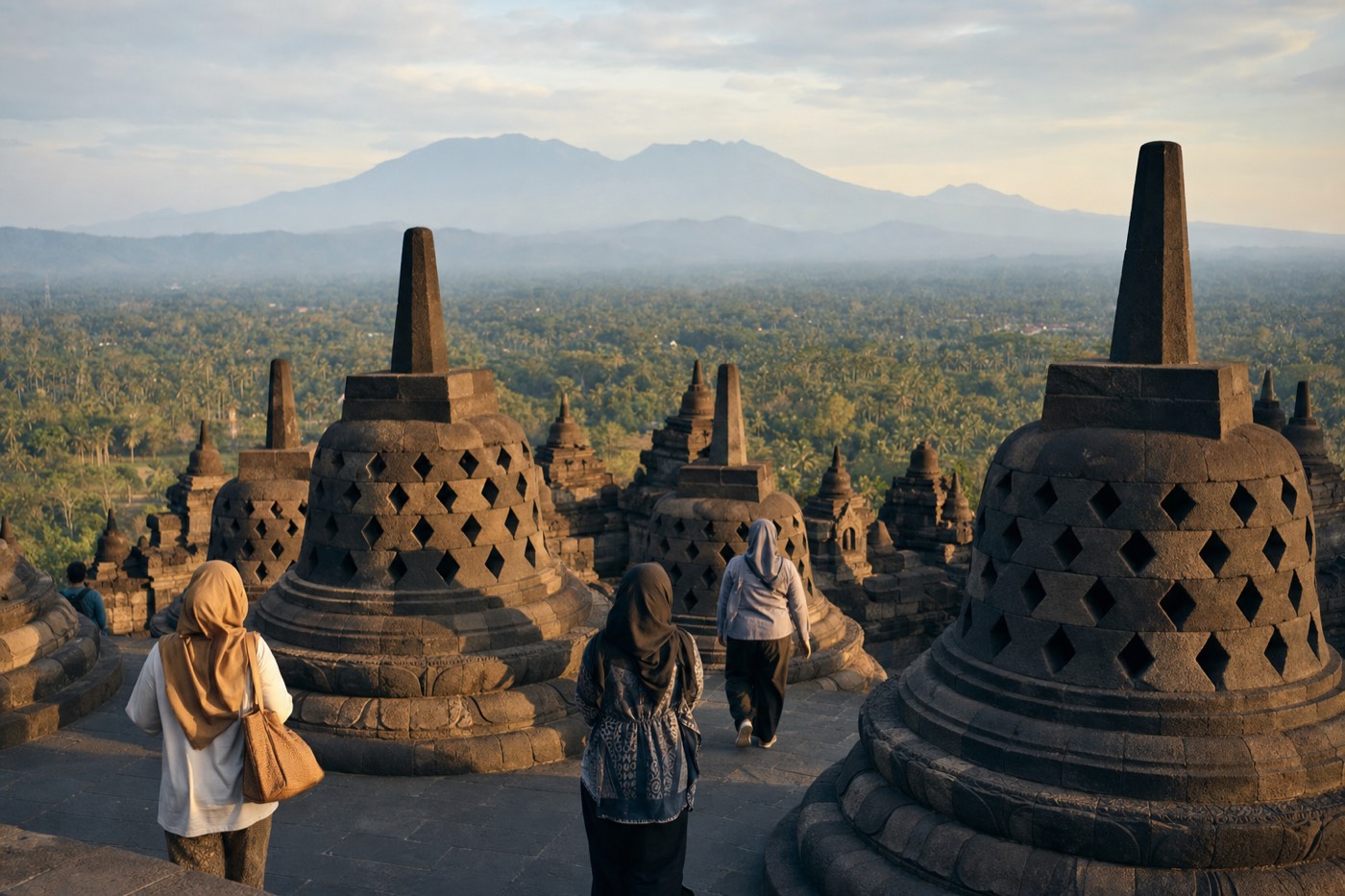
The question I get asked most often is not about Borobudur. It comes about twenty minutes into the drive back to Yogyakarta, when someone has run out of temple questions and starts looking out of the window at the rice terraces and the smoke from Merapi. "So what else is Indonesia known for?" they ask. And I always pause, because the honest answer is long, and because the person asking has usually just spent nine days on one island out of thousands.
I have guided people here since 2022. Most of them arrived through Bali. Many of them are surprised to learn that they were never really in the part of Indonesia where most Indonesians live.
What is Indonesia actually famous for?
Indonesia is famous for being the world's largest archipelago, for Bali, for its volcanoes, for Komodo dragons, for batik and gamelan, and for food built on chilli, coconut and slow-cooked beef. It is also famous, quietly, for holding the world's largest Buddhist temple, which almost nobody comes for.
That last clause is the one I keep having to say out loud. The country's reputation abroad is assembled almost entirely from one island's beaches and one lizard, and while both are real and both are worth your time, the list is much longer than the postcards suggest.
Here is the breakdown as I would give it to a traveller in the van, including where each famous thing actually sits, because the geography is the part that surprises people.
| Famous for | Where it actually is | The honest note |
|---|---|---|
| Beaches, surf, yoga, nightlife | Bali | Real, and genuinely good. Also one island of thousands. |
| Komodo dragons | Komodo and Rinca, in Flores, far east of Bali | A separate flight and a boat. Not a Bali day trip. |
| Volcanoes | The whole archipelago, densest through Java and Sumatra | Indonesia has more active volcanoes than anywhere on earth. |
| Batik | Java, above all Yogyakarta, Solo and Pekalongan | A UNESCO-listed craft, not a souvenir print. |
| Orangutans | Sumatra and Kalimantan (Borneo) | Nowhere near Bali or Java. |
| The world's largest Buddhist temple | Central Java, an hour from Yogyakarta | Around 200,000 international visitors a year. |
| Rendang, satay, nasi goreng, sambal | Everywhere, but rendang is Sumatran (Padang) | The food you ate in Bali was often Javanese or Sumatran. |
| Gamelan and wayang shadow puppetry | Java and Bali, with different styles | Still performed, not staged for tourists only. |
Notice how little of that list is Bali. That is not a complaint about Bali. It is just the map.
How big is Indonesia, really?
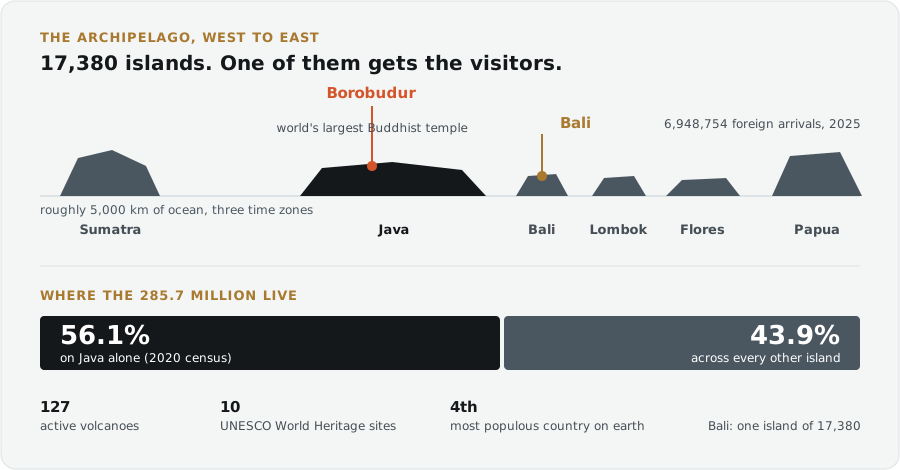
Indonesia is roughly 17,380 named islands stretched across some 5,000 kilometres, home to around 285.7 million people, making it the world's fourth most populous country. It spans three time zones. Flying from its western tip to its eastern tip takes longer than crossing Europe.
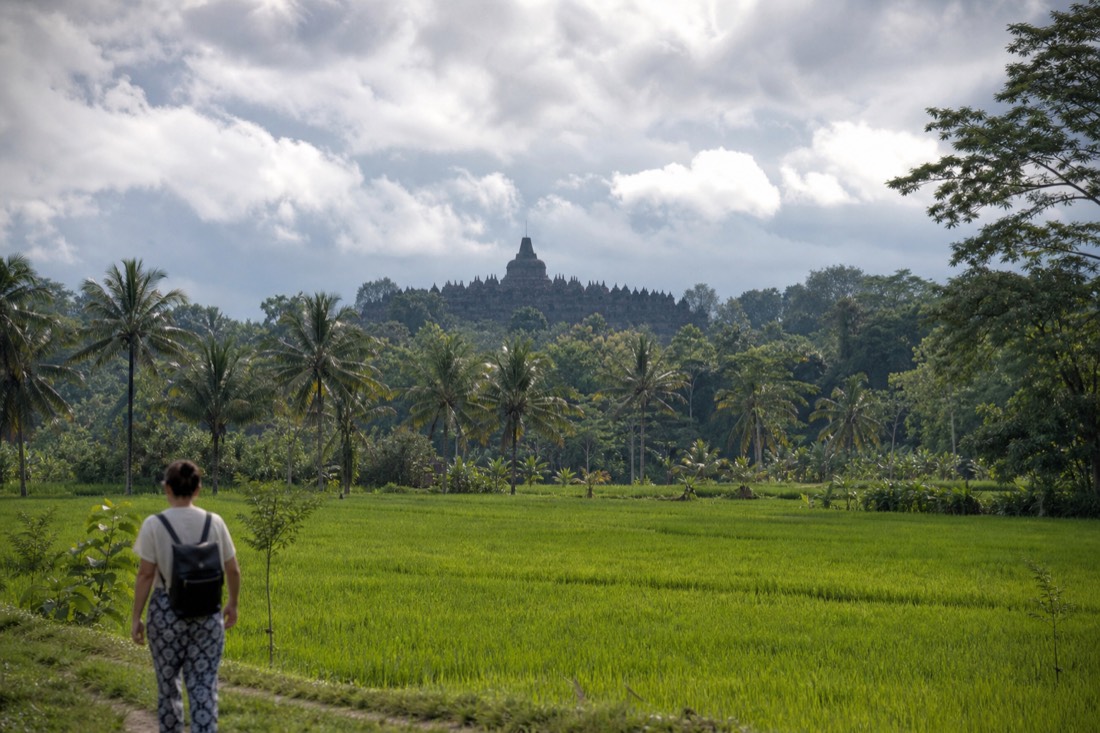
Scale is the thing that does not survive the journey into people's heads. Travellers arrive with a mental image of Indonesia as a holiday island with some extra bits attached. The reality is closer to a country the width of the United States, made of water, with a population concentrated hard onto one long island in the middle.
That island is Java. At the 2020 census, 56.1% of all Indonesians lived on it, on a landmass that is a small fraction of the national territory. Java is where the capital is, where the universities are, where the old courts are, and where the two greatest temple complexes in the country stand about an hour's drive apart.
Is Indonesia just Bali?
No, and the gap is enormous. Bali is one island of roughly 17,380, holding a small share of the national population, yet it takes the overwhelming majority of foreign attention. Around seven million foreign visitors reached Bali in 2025. Java's headline monument saw a fraction of that from abroad.
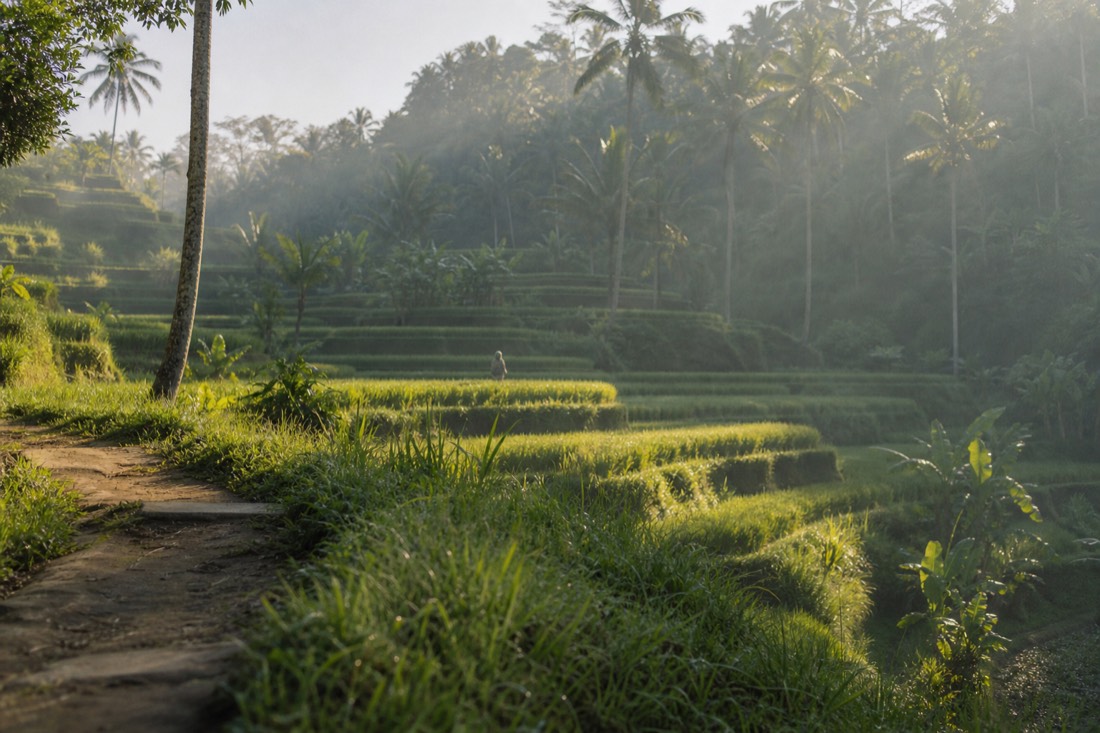
I want to be fair here, because guides from Java have a bad habit of sneering at Bali and it is unearned. Bali is popular for reasons that hold up: the beaches are good, the Hindu temple culture is alive and visible in a way that is rare, the food and hotel scene is genuinely world-class, and the island has spent fifty years learning how to look after visitors. If you want to lie down for a week and eat well, Bali is not a mistake.
The problem is not Bali. The problem is that Bali became shorthand for the whole country. Indonesia's foreign arrivals concentrate into one island so heavily that the provincial government introduced a tourism levy of IDR 150,000 per foreign visitor in February 2024, partly to manage the load. Meanwhile a nine-century-old monument the size of a small hill sits in Central Java with a queue you can walk straight through on most weekday mornings.
If you are weighing the alternatives seriously, I have written a fuller answer in where to go instead of Bali.
Why is Indonesia famous for volcanoes?
Indonesia sits on the collision of three tectonic plates along the Pacific Ring of Fire, which has produced 127 active volcanoes, the highest count of any country. Two of them, Tambora and Krakatoa, caused globally consequential eruptions in the nineteenth century.
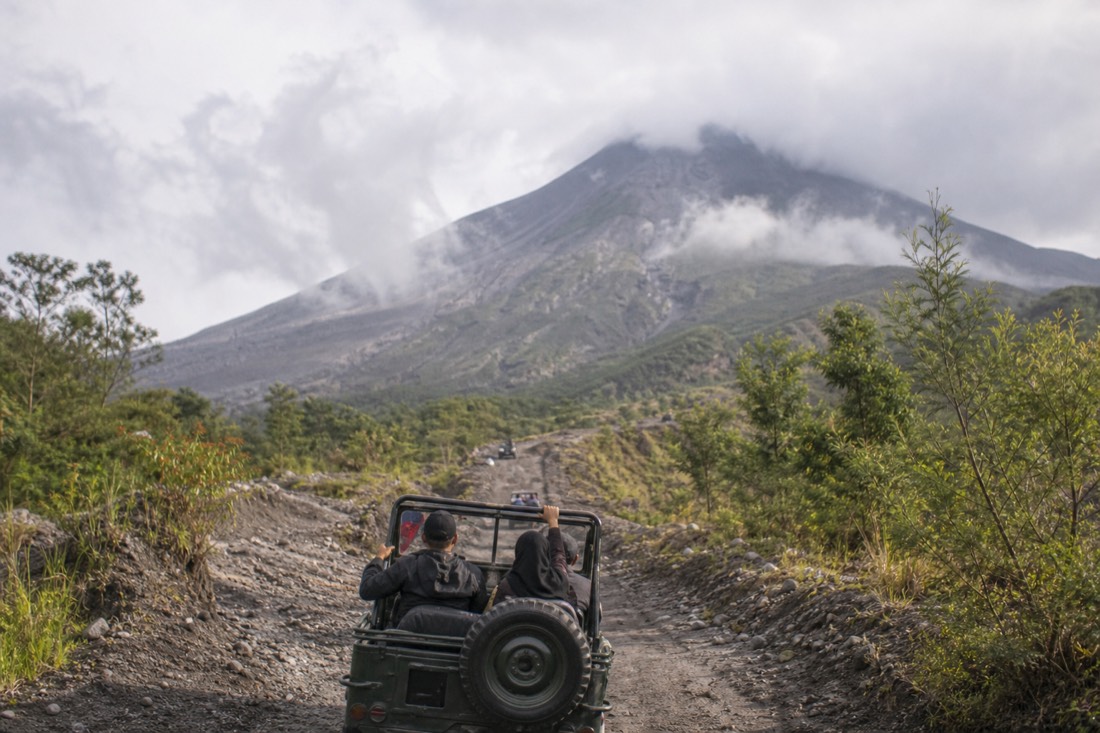
You do not have to look for volcanoes here. They look at you. From the upper terraces of Borobudur on a clear morning you can see Merapi, Merbabu, Sumbing and Sindoro standing around the Kedu Plain like the rim of a bowl, and Merapi is very much awake. The Smithsonian Global Volcanism Program's country list is the count I trust, and 127 is a number worth sitting with.
The volcanoes are also why Java is Java. The ash makes the soil absurdly fertile, the fertile soil fed a dense population for a thousand years, the dense population built kingdoms, and the kingdoms built temples. Borobudur exists because a volcano made the rice grow. That is not a metaphor, it is the actual causal chain.
| Volcanic Java, in practical terms | What it means for a visitor |
|---|---|
| Merapi, north of Yogyakarta | Active. Jeep tours run on the lower slopes. Visible from Borobudur on clear mornings. |
| The Kedu Plain ring of peaks | The backdrop to every Borobudur sunrise photograph you have seen. |
| Volcanic soil | Rice terraces, tobacco, coffee, and the reason Java fed the courts that built the temples. |
| Ash and eruption history | One unproven theory ties Borobudur's abandonment to Merapi's 1006 eruption. Treat it as a hypothesis. |
Book the sunrise climb
Ready to book the sunrise climb?
Dawn from Punthuk Setumbu, then the Borobudur climb itself, with hotel pickup from Yogyakarta. Free cancellation up to 24 hours, reserve now and pay later: booking takes 2 minutes and costs nothing today.
Check live availability & prices →What is Indonesian food known for?
Indonesian food is known for rendang, nasi goreng, satay, gado-gado and sambal, built on chilli, coconut milk, palm sugar, shrimp paste and slow cooking. It is regional rather than national: rendang is Sumatran, gudeg is Yogyakarta's, and what most tourists eat in Bali was invented elsewhere.
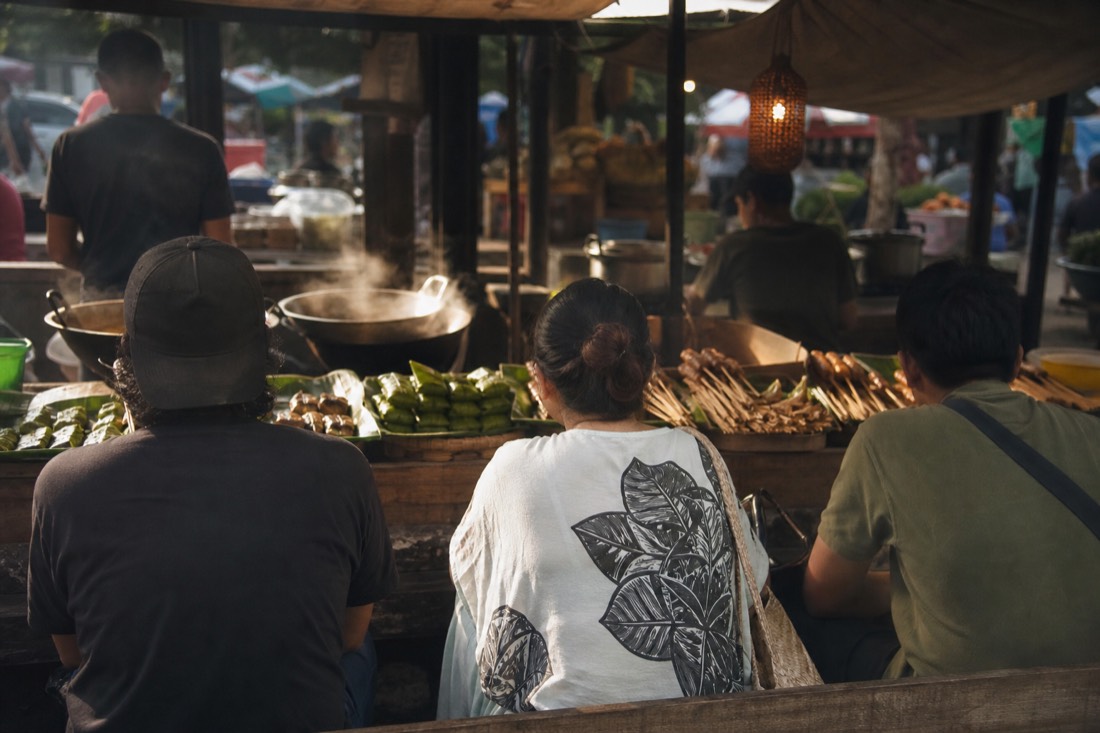
This is the one where I get genuinely enthusiastic, and where visitors who only ate at their hotel have missed the most. The dish people name first is usually rendang, a Minangkabau beef curry from West Sumatra cooked down for hours until the coconut milk breaks and coats the meat. It is nothing like the quick curries served on beach menus.
In Yogyakarta the local obsession is gudeg, young jackfruit stewed for hours with palm sugar until it goes brown and sweet, eaten for breakfast with rice and egg. It divides visitors sharply. Half of my groups love it. The other half look betrayed that breakfast is sweet.
The honest advice: eat where the plastic stools are. The best food I have eaten in this country cost less than a coffee and came from a cart that had no name.
What is Indonesia famous for culturally?
Indonesia is culturally famous for batik, gamelan orchestras, wayang shadow puppetry, and its living court traditions. Indonesian batik was inscribed on UNESCO's intangible cultural heritage list in 2009. Java, and Yogyakarta in particular, is where most of that tradition is still practised daily rather than performed.
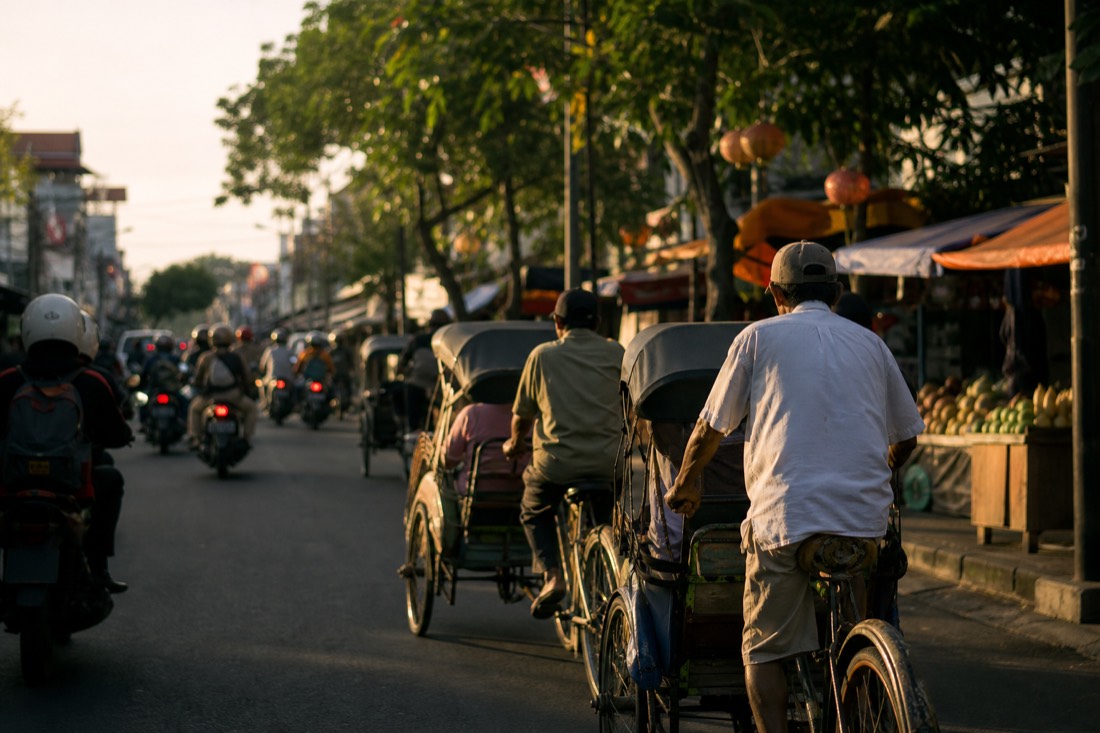
Batik is the one to understand, because most visitors buy a printed imitation and think they have bought batik. Real batik is wax-resist dyeing, drawn by hand with a small copper spouted tool called a canting or stamped with a copper block, then dyed, then the wax boiled out, often over several rounds. A serious hand-drawn piece takes weeks. UNESCO listed Indonesian batik as intangible cultural heritage in 2009, and the listing is about the technique and the meaning of the motifs, not the fabric on the souvenir rack. The fastest way to understand the difference is an afternoon with a canting in your own hand; Yogyakarta workshops run hands-on classes where you draw, wax and dye a piece you keep, so check the class and its dates here if that sounds like your kind of souvenir.
Gamelan is the bronze percussion orchestra you hear before you see, tuned to scales that do not map onto a piano and never quite resolve the way a Western ear expects. Wayang kulit, the shadow puppet theatre, runs all night in Javanese villages and tells the Ramayana and Mahabharata, the same stories carved onto Prambanan.
What should you actually see in Indonesia besides Bali?
The strongest non-Bali options are Java for temples and culture, Flores and Komodo for dragons and diving, Lombok for quieter beaches, and Sumatra for jungle and orangutans. Java is the easiest add-on: Yogyakarta is a short direct flight from Bali and puts two world-class temple complexes within an hour of your hotel.
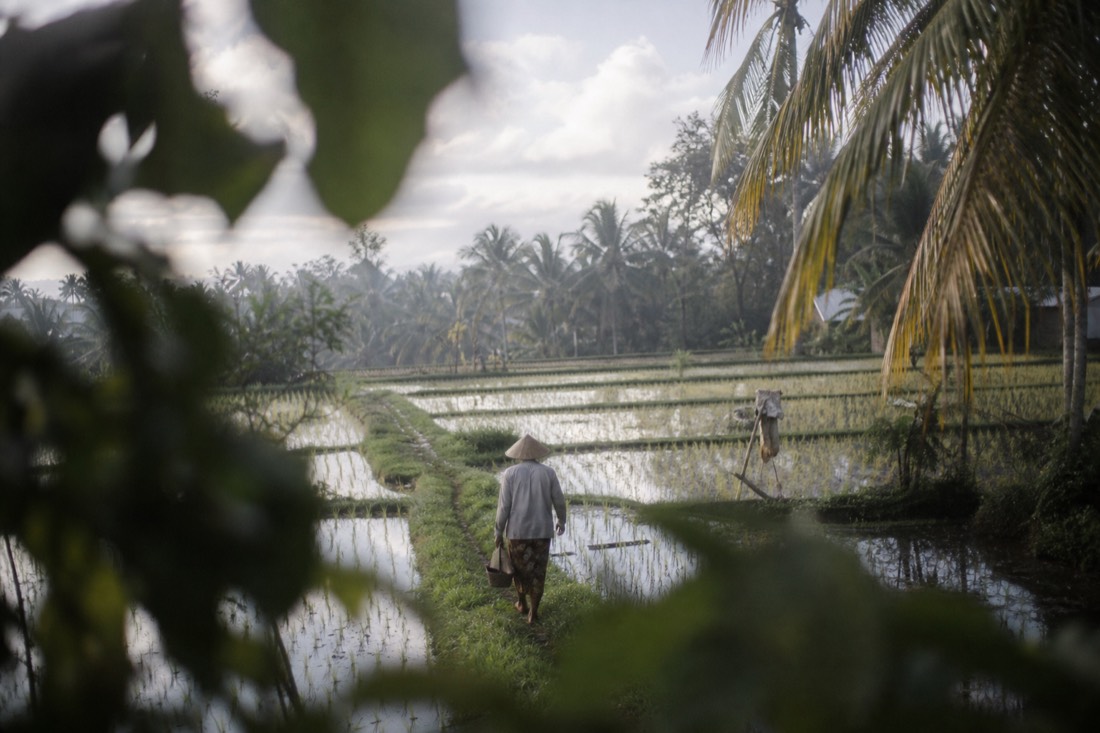
Ranked honestly by effort against reward, for someone who has already committed to a Bali-shaped trip:
| Where | What it gives you | Effort from Bali | Worth it if |
|---|---|---|---|
| Yogyakarta, Java | Borobudur, Prambanan, batik, court culture, street food | Direct flight, around 1h35 | You want the culture Bali does not have. |
| Flores / Komodo | Komodo dragons, some of Asia's best diving | Flight to Labuan Bajo, then boats, multi-day | You want wildlife and will give it real days. |
| Lombok | Beaches without the Bali density, Rinjani trekking | Short flight or fast boat | You liked Bali but wanted it quieter. |
| Sumatra | Jungle, orangutans, Lake Toba, Padang food | Long flight, long overland | You have two weeks and real appetite. |
Komodo National Park drew around 432,000 visitors in 2025, and Lombok recorded roughly 430,000 international arrivals in 2024 alongside more than three million domestic ones. Set those against Bali's near-seven million and you can see how lopsided the map still is.
Java is the one I push hardest, and not only because I live here. It is the cheapest to add, the shortest detour, and the biggest single jump in what you actually see. Two of Indonesia's ten UNESCO World Heritage properties sit within an hour of each other outside Yogyakarta, which you can check on UNESCO's list of Indonesian sites.
Where does Borobudur fit into all this?
Borobudur is the world's largest Buddhist temple, a 9th-century Mahayana monument in Magelang Regency, Central Java, about an hour northwest of Yogyakarta. It carries 1,460 narrative relief panels and has been UNESCO-listed since 1991. Roughly 200,000 of its 1.3 million annual visitors in 2024 came from abroad.
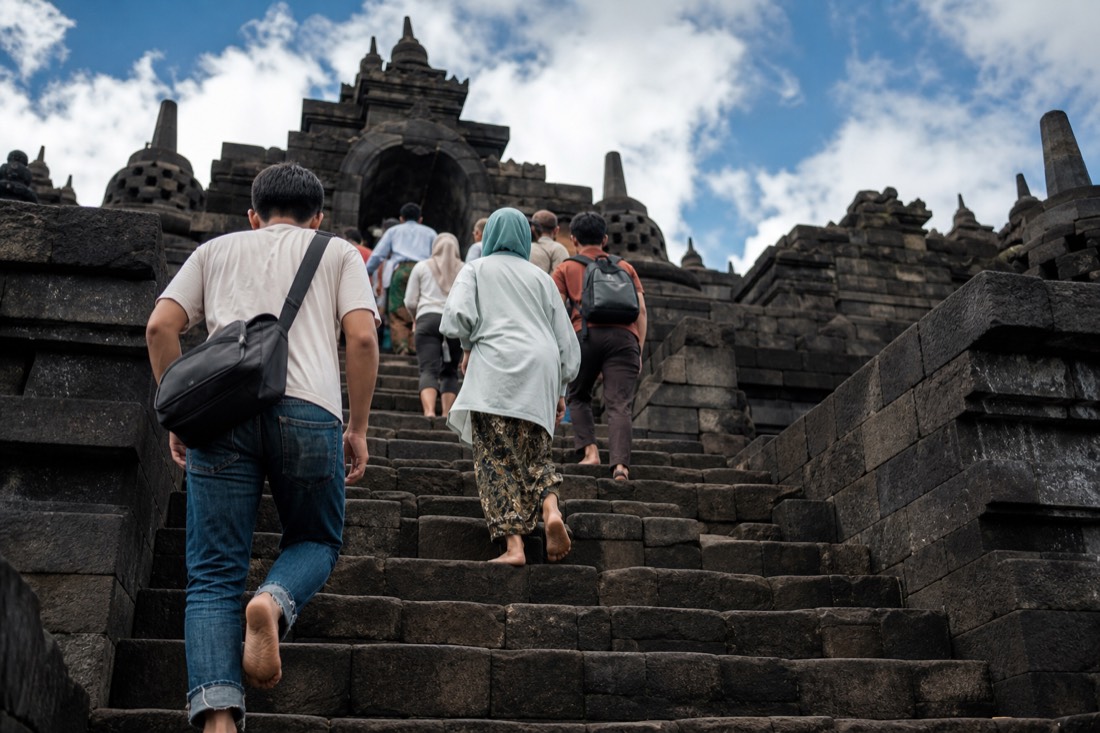
I have saved it for last deliberately, because a post about Indonesia that opens with Borobudur is an advert, and this is not one. But it belongs here, because it is genuinely one of the answers to the question, and it is the answer that gets left out.
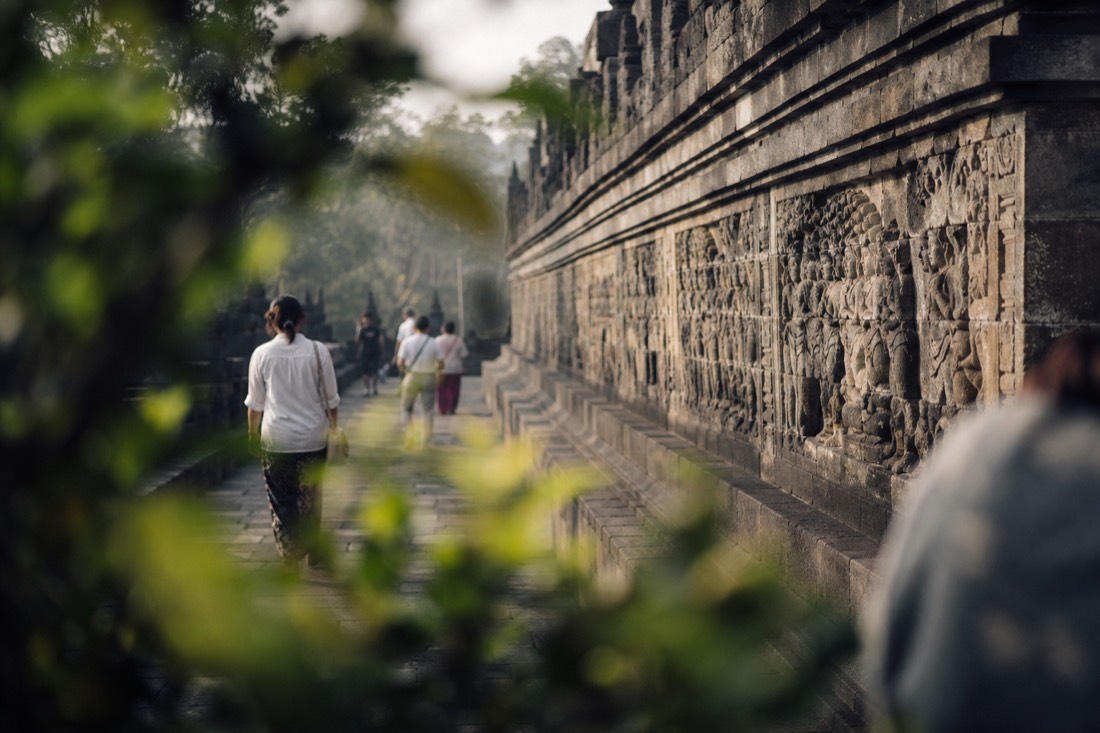
Construction began around 778 AD and finished around 825. Nine stacked platforms, six square and three circular, with the main stupa standing about 35 metres above the base. The reliefs are a continuous carved narrative you read by walking clockwise, terrace by terrace, and they are the largest and most complete Buddhist relief ensemble anywhere. It was inscribed as the Borobudur Temple Compounds in 1991, together with Mendut and Pawon.
Then it was lost. The Javanese court moved east around 929 AD under Mpu Sindok, Java later turned to Islam, and the monument slid out of use somewhere between the tenth and fifteenth centuries. Local people never forgot it was there. A Javanese court poem still mentioned it around 1365. It was cleared in 1814 after Raffles sent H.C. Cornelius with roughly 200 workers. If that history interests you, I have gone deeper into whether it is worth your day, and into what makes Yogyakarta worth the detour at all.
You can climb the structure every day now. The monument's terraces open 08:30 to 17:00, the grounds from 06:30, and Monday closures ended in the third week of July 2025. Dawn tours watch the sun come up from Punthuk Setumbu, a hill about 2.5 kilometres away, then come down to climb, which is the version most of my groups book. If that is your morning, the Borobudur Sunrise Climb & Prambanan tour is the one I would point you at, and you can check live availability & prices on GetYourGuide. The full set is on the tours page.
So: what is Indonesia famous for? Islands, beaches, dragons, volcanoes, batik, and food that deserves more credit than it gets. And one enormous stone mountain of a temple in the middle of Java that most people who visit this country fly straight past. I would like that last one to change, but I would settle for you knowing it is there.