2026-06-23
Is Yogyakarta Worth Visiting? An Honest Case for Java's Culture Capital
Yes, for temples, batik, court culture and street food. No, if you came for a beach. A local guide's honest case for Yogyakarta, with the counters included.
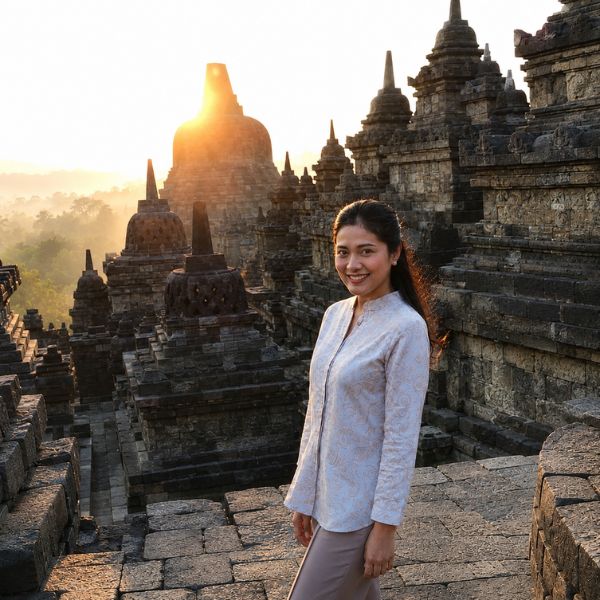 By Dewi Lestari, Borobudur temple tour guide since 2022
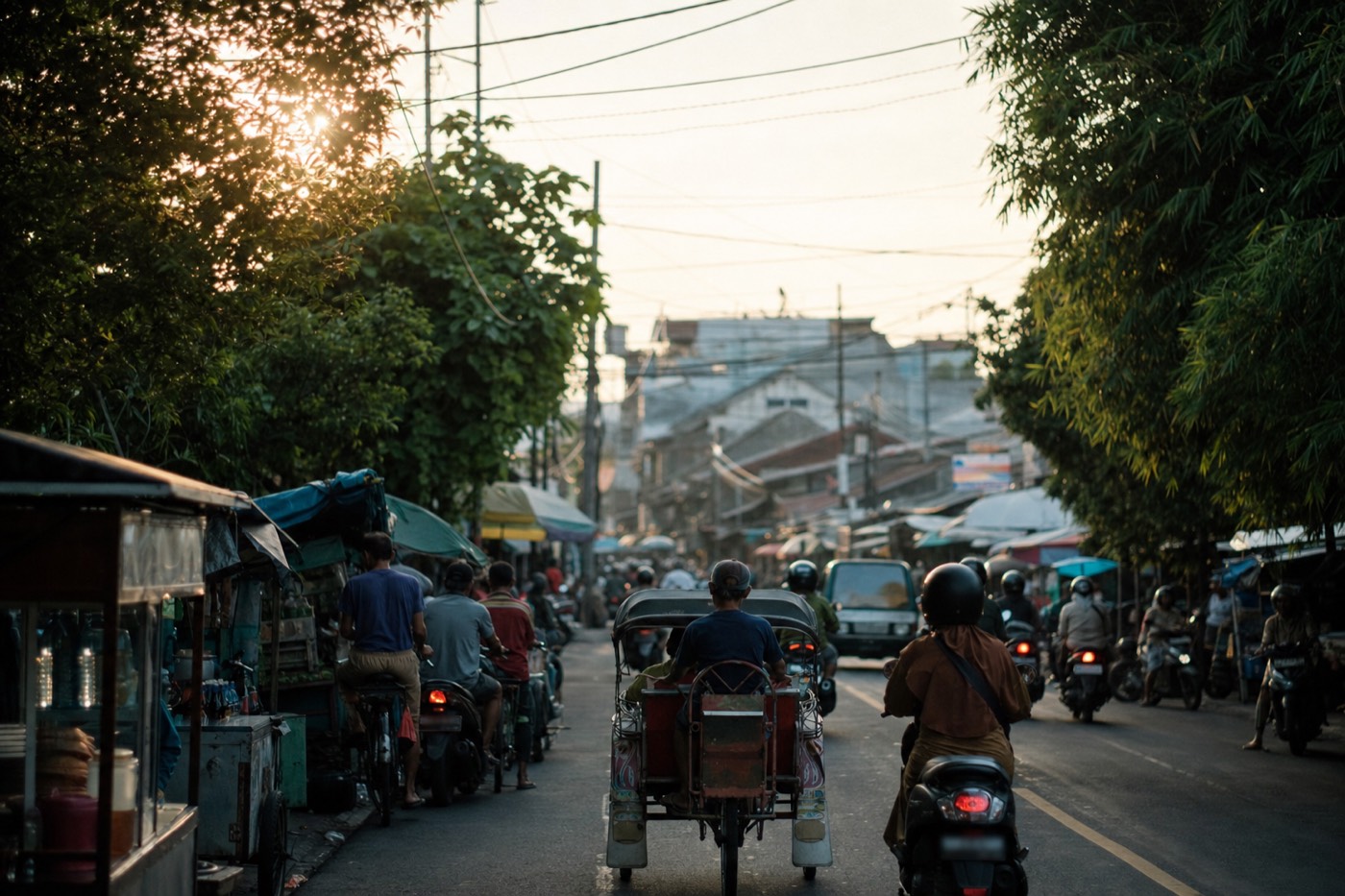
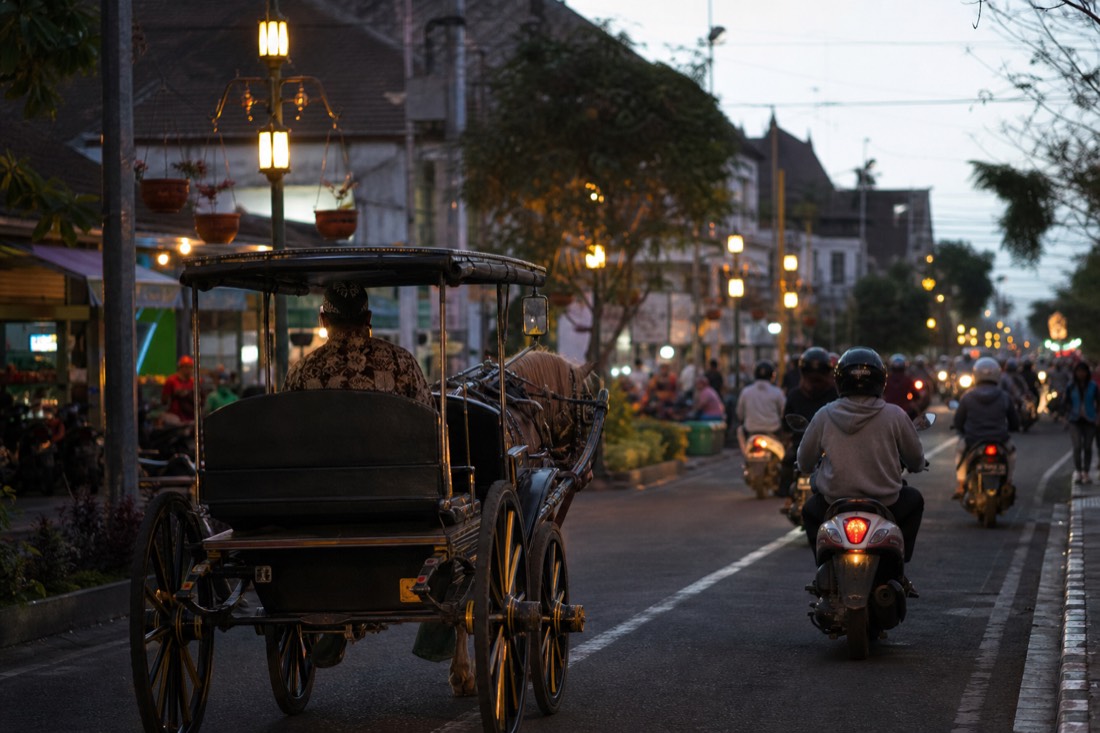
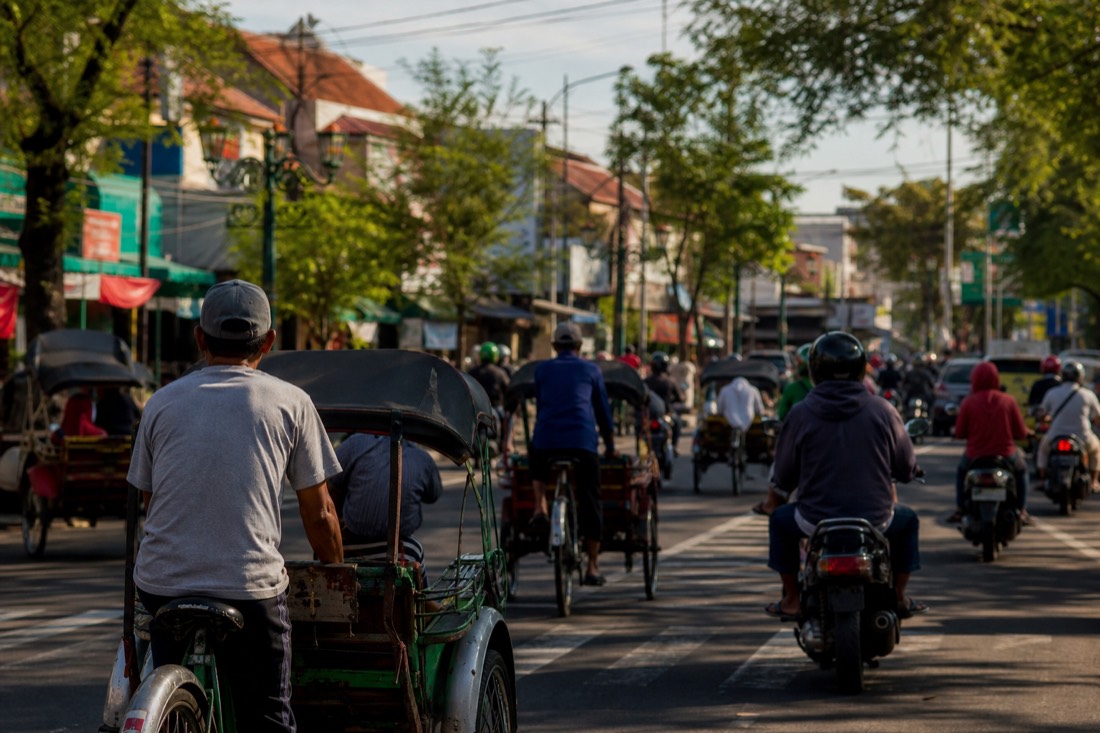
At about four in the afternoon Yogyakarta smells like clove smoke and frying shallots, and the becak drivers park in the shade on Jalan Malioboro and argue about football. I have lived with that sound for years and I still like it. It is also, I admit, not what most people picture when they book a holiday to Indonesia. Nobody arrives here for the view from a sun lounger, because there is not one.
So when someone emails asking whether this city is worth two days of a Bali trip, I try to answer it properly rather than sell it. Here is the properly.
Is Yogyakarta worth visiting?
Yes, if you want temples, culture and food. Yogyakarta puts two 9th-century UNESCO World Heritage temple complexes within an hour of your hotel, keeps a sultan in residence at a working palace, and remains the centre of Javanese batik. No, if you want a beach, because it does not have one worth your afternoon.
That is the whole review, and everything below is the detail. This is a university city and a court city that happens to sit between the two greatest monuments in Southeast Asia outside Angkor. What it is not is a resort. Guests who understand that leave delighted. Guests who expected Ubud with temples leave puzzled.
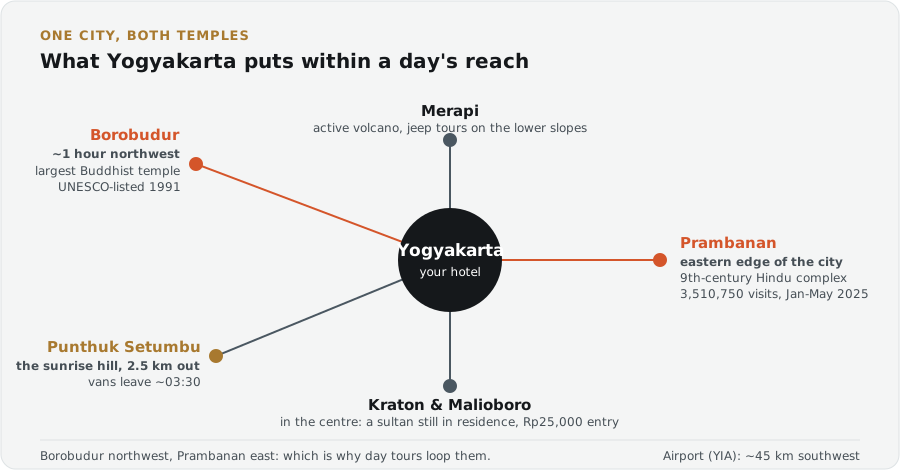
The clearest way to see why the city works is to look at what you can actually reach from it in a single day.
What is Yogyakarta actually known for?
Yogyakarta is known for being Java's cultural capital: the base for Borobudur and Prambanan, home to a reigning sultan at the Kraton, the heart of Javanese hand-drawn batik, and a street food city built on gudeg. It is also officially a Special Region, governed by the Sultan as hereditary governor.
That last fact is the one that explains the rest. Yogyakarta is not an ordinary province. It is the Daerah Istimewa Yogyakarta, a province-level special region where the Sultan serves as hereditary governor, a constitutional arrangement that exists nowhere else in Indonesia. The court never stopped being a court.
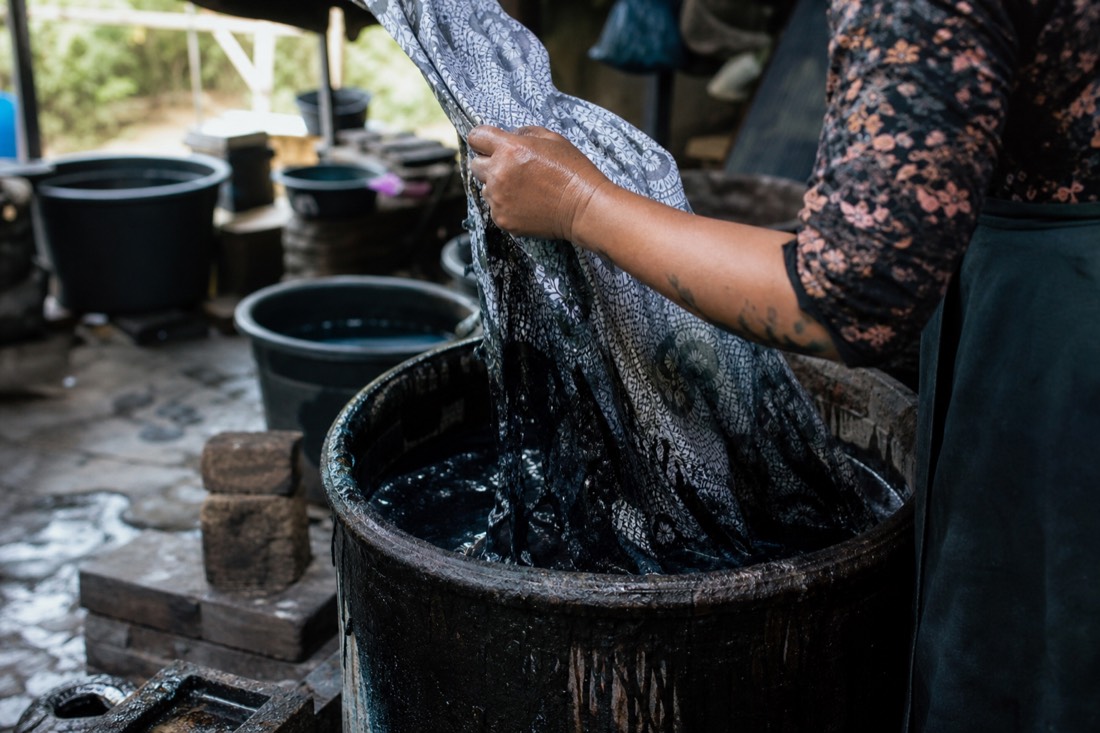
You feel that in small ways. The palace employs people whose job is to keep a gamelan orchestra and a shadow puppet tradition alive. Batik here is a working craft, not a heritage exhibit. The city has an old, slightly stubborn sense of itself as the place that kept Javanese culture when Jakarta went modern and Bali went international.
| What Yogyakarta is known for | What it actually is | Where |
|---|---|---|
| Borobudur | World's largest Buddhist temple, 9th century, UNESCO 1991 | ~1 hour northwest, Magelang Regency |
| Prambanan | 9th-century Hindu complex, separately UNESCO-listed | Eastern edge of the city |
| The Kraton | A working sultan's palace, still a residence | City centre |
| Malioboro | The main shopping and street-food artery | Runs about 1-2 km north from the Kraton's north entrance |
| Batik | Hand-drawn wax-resist textile, UNESCO-listed craft in 2009 | Workshops across the city |
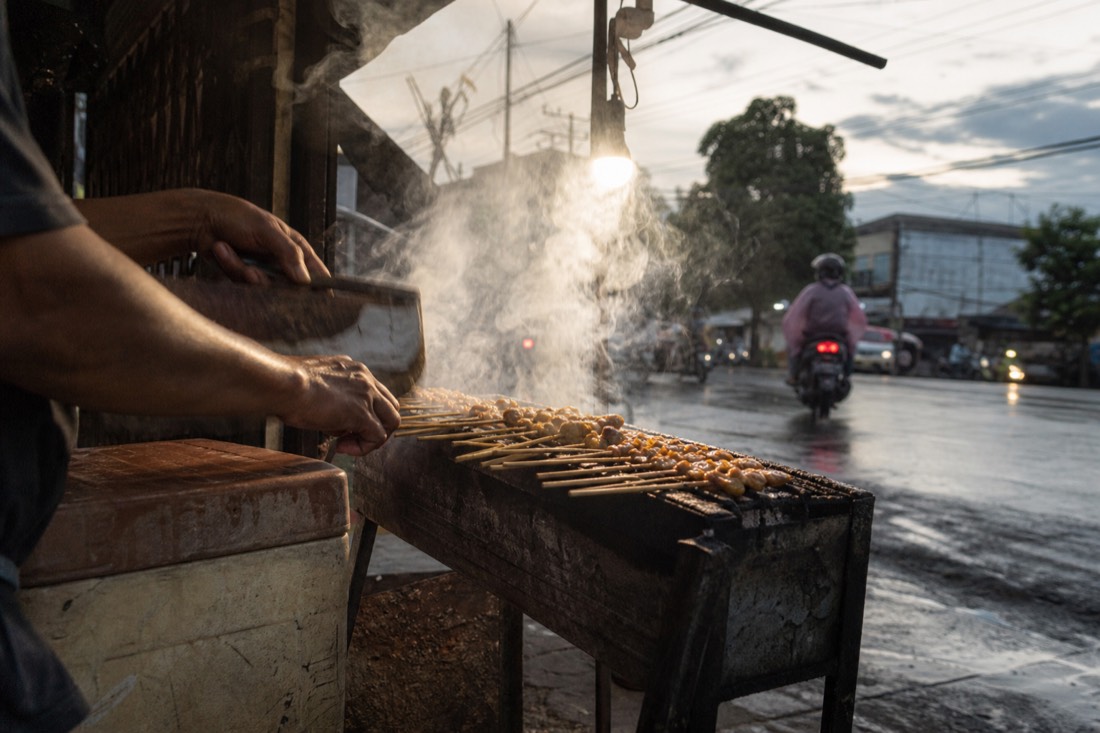
| Gudeg | Jackfruit stewed for hours with palm sugar | Everywhere, usually at breakfast |
| Merapi | An active volcano with jeep tours on the lower slopes | North of the city |
Why is Yogyakarta the base for Borobudur and Prambanan?
Because it sits between them. Borobudur is about an hour northwest in Magelang Regency, Prambanan is on the eastern edge of the city, and no other city is close to both. That geography is the entire reason day tours loop the two together from Yogyakarta hotels.
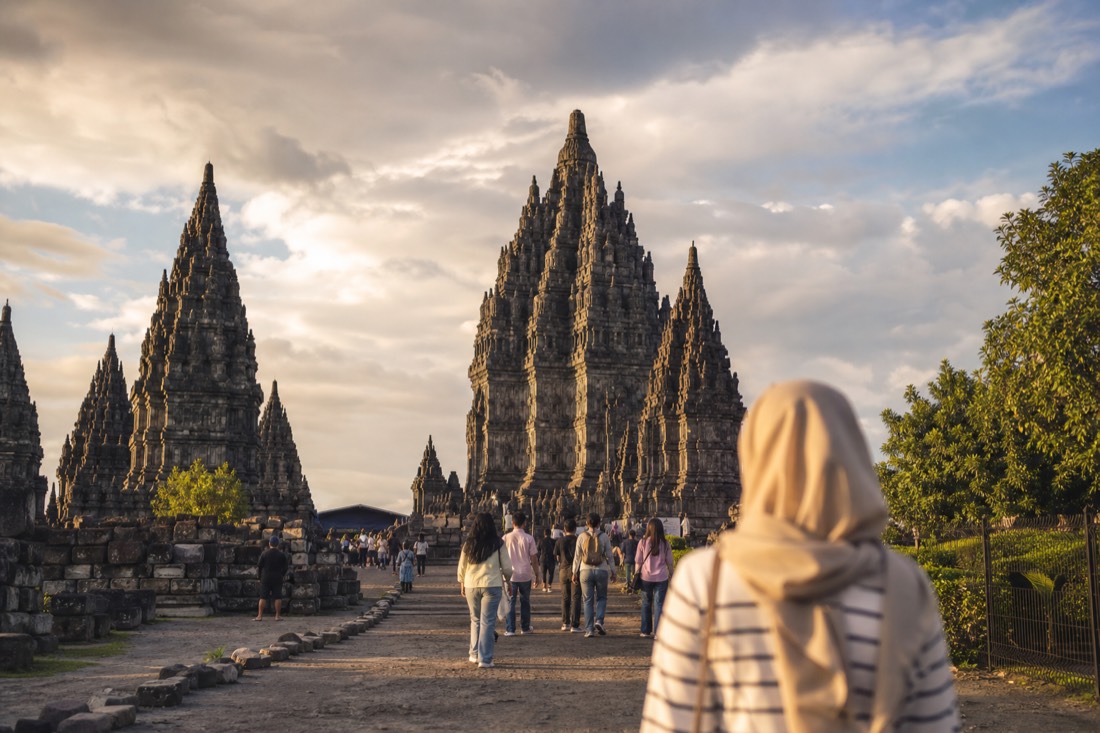
This is the practical heart of the city's case. Look at a map and the logic is immediate: the two greatest temple complexes in Indonesia sit on opposite sides of one mid-sized city, roughly an hour apart from it in each direction. You cannot base yourself at Borobudur and easily do Prambanan, or the reverse. You base yourself here and do both.
Borobudur is a 9th-century Mahayana Buddhist monument, built from around 778 to 825 AD, nine stacked platforms with six square terraces and three circular ones, the main stupa about 35 metres above the base, and 1,460 narrative relief panels running clockwise around the terraces. It is UNESCO-listed as the Borobudur Temple Compounds, together with Mendut and Pawon.
Prambanan is the Hindu counterpart and the visitor numbers show it is no minor stop: the operator reported 3,510,750 visits in the first five months of 2025 alone. Its spires are carved with the Ramayana, the same story the shadow puppets tell all night in Javanese villages. You can watch that story danced at full scale on the open-air stage beside the lit temple at the evening Ramayana Ballet; check dates and tickets here. It is an evening on its own, separate from the temple day tours.
The practical mechanics of getting out to the temple are in the Borobudur from Yogyakarta guide, and how much time to allow once you are there is in how long at Borobudur.
How many days do you need in Yogyakarta?
Two full days does the city properly: one for the temple loop, one for the Kraton, batik and Malioboro. Three if you want Merapi as well. One day is enough only if you accept it will be the temples and nothing else.
Most of my guests arrive with a day and a half carved out of a Bali fortnight, which is tight but workable. The realistic shapes:
| Time you have | What fits | What you miss |
|---|---|---|
| One day | Borobudur climb + Prambanan on a single loop | The city itself, entirely |
| Two days | The temple loop, plus Kraton, batik and Malioboro | Merapi, the beaches to the south |
| Three days | Add Merapi jeeps or a sunrise start, at a human pace | Not much that matters |
| A week | Solo, the south coast, deeper batik workshops | You are now on a Java trip, not a detour |
Where you sleep matters less than people fear, because tours pick up across the city. Three bases my guests keep being happy with: The Phoenix, the city's colonial-era heritage hotel, now run under Accor's Handwritten Collection; the Hyatt Regency, the gardens-and-pool resort option on the city's edge; and Adhisthana in Prawirotaman, the guesthouse-budget pick in the cafe quarter. Rooms for all three are on Expedia:
The Phoenix Hotel Yogyakarta Check rates ›
Hyatt Regency Yogyakarta Check rates ›
Adhisthana Hotel Yogyakarta Check rates ›
Two is the number I would defend. One day is a raid. Three is comfortable. If you are debating whether the detour is worth making at all, I have argued that case at length in where to go instead of Bali.
Book the day tour
Rather skip the 3am alarm?
The daytime Borobudur climb with Candi Mendut and Prambanan, no pre-dawn start, hotel pickup included. Free cancellation up to 24 hours, reserve now and pay later: booking takes 2 minutes and costs nothing today.
Check live availability & prices →What are the honest reasons not to come?
Three: there is no beach, the traffic in the city centre is genuinely bad, and it is hot and humid year-round with real downpours from November to April. If a lie-down holiday is what you are after, Yogyakarta will feel like work.
I would rather you know this before you book than resent it afterwards.
No beach. The south coast exists but it is a long drive, the surf is dangerous, and the sand is not why anyone comes. If you want water, Bali and Lombok are simply better and it is not close.
Traffic. The centre clogs badly, especially around Malioboro in the evenings and on Indonesian public holidays, when domestic visitors arrive in enormous numbers. Those 3.74 million domestic visits in a single December are not abstract; they are on the road in front of you.
Heat. It is equatorial. Central Java runs dry from May to October, driest in July and August, and wet from November to April, wettest between December and February. The rain mostly arrives as afternoon and evening downpours, so mornings stay clearer, which is why every sensible temple plan starts early. That seasonal detail is worked through in the best time to visit Borobudur.
Crowds are domestic, not foreign. This confuses people. Yogyakarta is not full of tourists like you; it is full of Indonesian families. In December 2024 the Special Region logged 7,167 foreign visits against roughly 3.74 million domestic ones. You are a rounding error here, which is part of the charm and all of the reason nobody is hassling you in English.
Is the Kraton worth visiting?
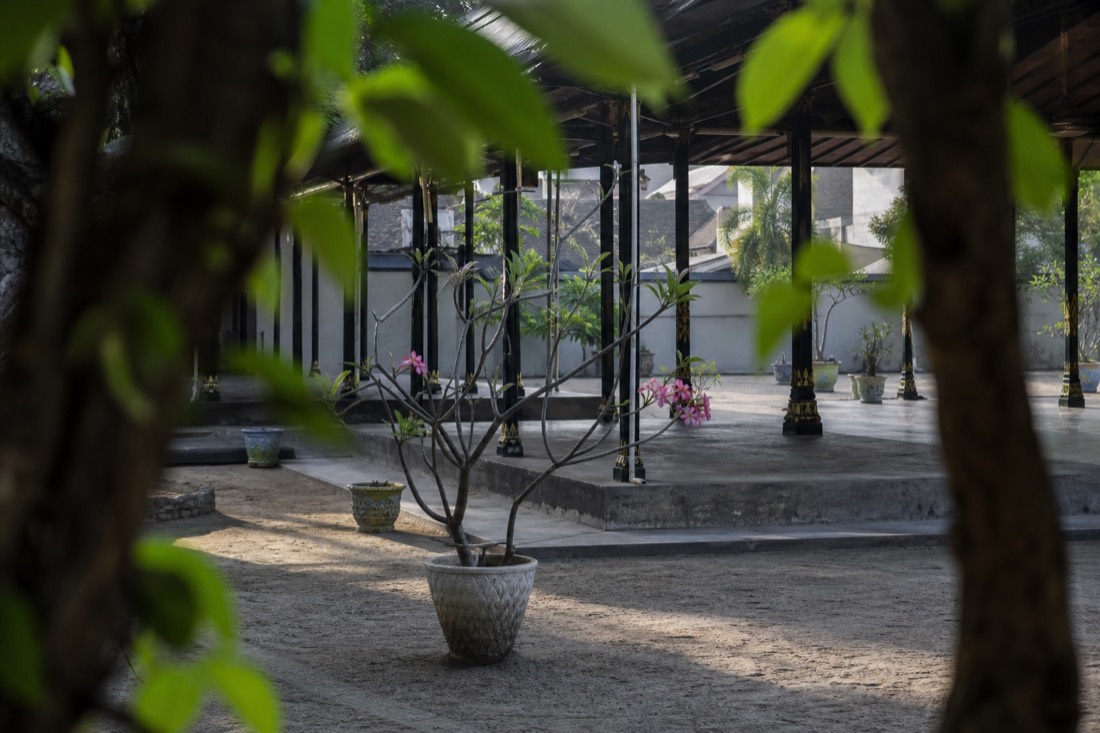
Yes, with the right expectation. The Kraton is a working sultan's palace and still his residence, open to the public at around Rp25,000 for a foreign adult. It is a quiet compound of pavilions, gamelan and court servants, not a grand European-style palace of treasures.
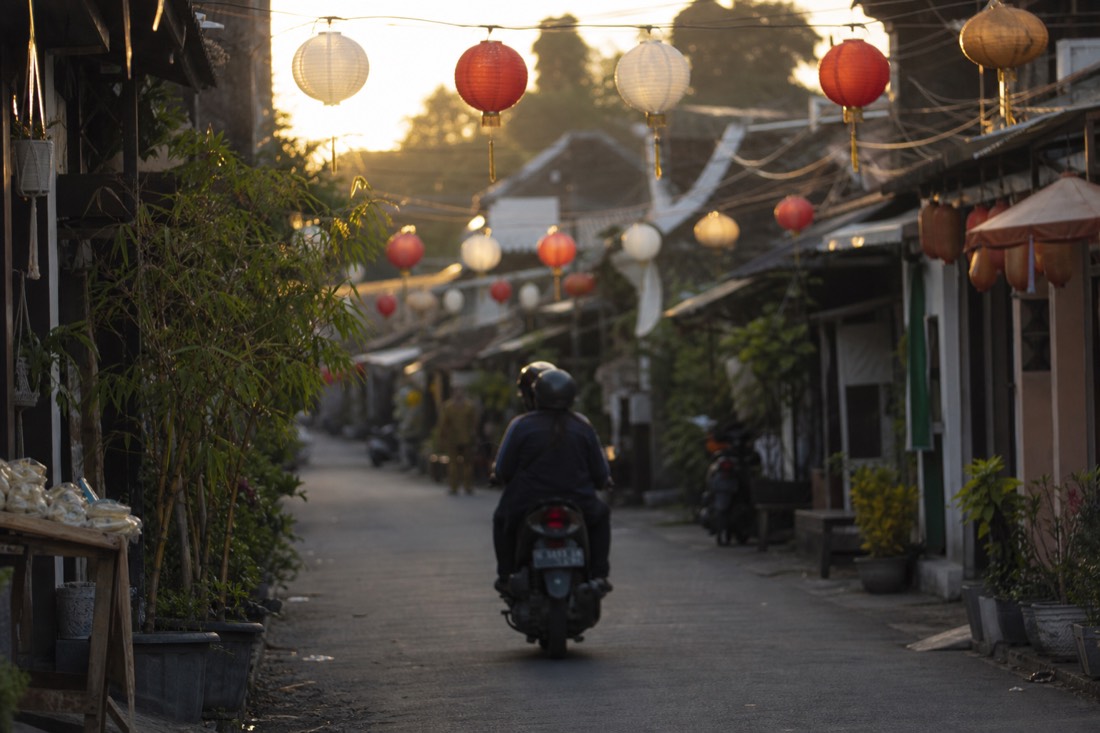
Manage this one carefully, because it is the site my guests most often misjudge. People hear "sultan's palace" and picture Versailles. What you get is low open pavilions, shaded courtyards, elderly retainers in traditional dress, a gamelan being played because a gamelan is played on that day of the week, and a modest museum. The national tourism board's listing gives the practical details.
The value is in the fact that it is real. The Sultan lives there. This is not a restored monument, it is an institution that has never stopped operating, in a region he still governs. Go in the morning, take a guide from the palace itself, and give it an hour and a half.
Then walk north up Malioboro, which runs a kilometre or two from the Kraton's northern entrance and is where the city eats, shops and argues. It is busy, a bit chaotic and full of batik sellers, becak drivers and food carts. Do not buy your batik in the first three shops.
How do you get to Yogyakarta?
By air into Yogyakarta International Airport at Kulon Progo, which handled 4,275,848 passengers in 2024 and sits about 45 kilometres southwest of the city, or by train from Jakarta and Surabaya. A direct flight from Denpasar takes roughly 1h35.
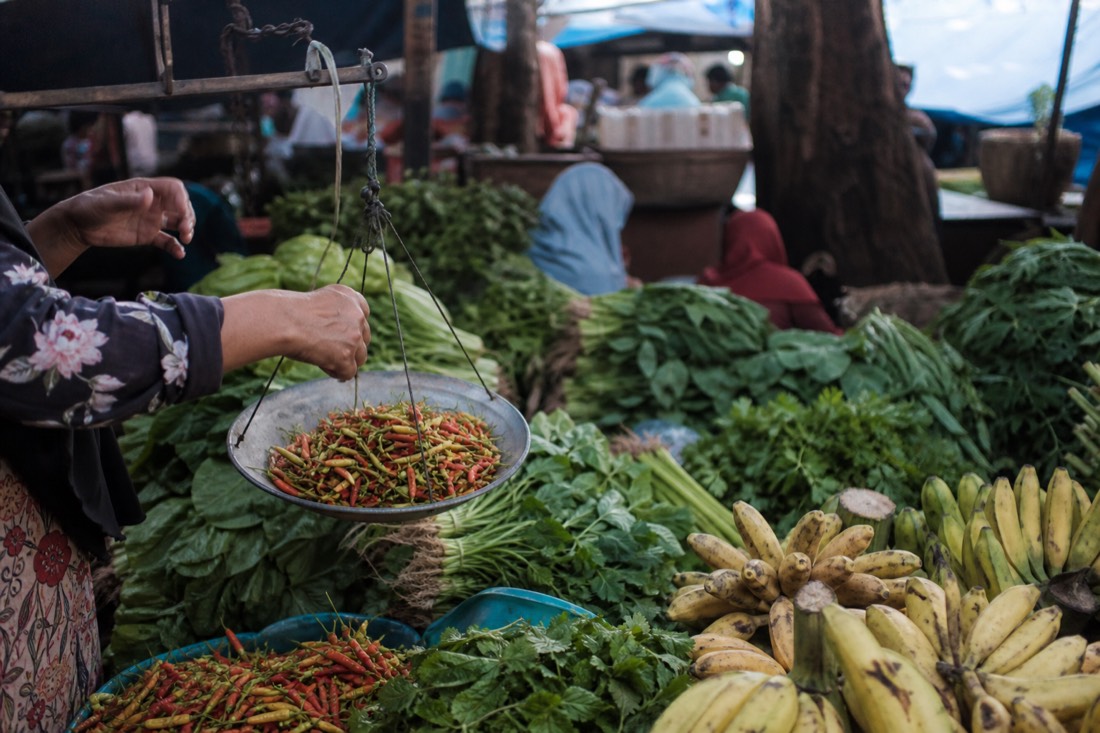
The airport is the thing to plan around. It is not close. Budget an hour or so into the city, and more if you land into evening traffic. There is a rail link, and taxis and hotel transfers are straightforward.
The train is the option people forget and often the nicer one. Java's rail network is good, cheap and punctual, and the run from Jakarta is one of the better train journeys in Asia. If you are already on Java, take the train.
| Route | How | Rough time |
|---|---|---|
| Bali (Denpasar) to Yogyakarta | Direct flight | ~1h35 in the air |
| Jakarta to Yogyakarta | Train | Half a day, and worth it |
| Airport (YIA) to city centre | Rail link, taxi or hotel transfer | ~45 km southwest of the centre |
| City to Borobudur | Road, northwest | ~1 hour |
| City to Prambanan | Road, east | Eastern edge of the city |
What is the best way to see both temples in a day?
Take a tour that loops them, because the geography punishes doing it yourself. Borobudur is an hour northwest, Prambanan is east, and a self-drive day means two return trips through city traffic. A guided loop runs them in sequence with one vehicle and one driver.
The climb ticket is worth understanding before you go. Structure access runs 08:30 to 17:00 daily, the grounds open from 06:30, and Monday closures ended in the third week of July 2025, so every day is now a climbing day. The climb ticket already includes your guide, a wristband and the Upanat sandals you must wear on the stonework, which you keep. It does not include breakfast.
If you would rather not be awake at 03:30, the Borobudur Climb & Prambanan Day Tour is the one I would put most first-time visitors on: about eight hours, hotel pickup, both temples plus Candi Mendut with its famous seated Buddha, and a start time that lets you sleep. You can check live availability & prices on GetYourGuide, and the sunrise alternatives, which watch dawn from Punthuk Setumbu about 2.5 kilometres from the monument, sit alongside it on the tours page.
So, is Yogyakarta worth visiting? If your holiday is measured in beaches, no. If you want to stand on a 1,200-year-old stone mountain at eight in the morning with volcanoes on the horizon, eat something strange and excellent for two pounds, and watch a court culture that never stopped, then two days here will be the part of the trip you talk about. That is not a sales line. It is just what my guests keep telling me on the way to the airport, usually a little annoyed that nobody mentioned it sooner. The wider version of that argument is in what Indonesia is actually famous for.