2026-07-07
Is It Rainy Season in Indonesia Right Now? A 2026 Month-by-Month Answer
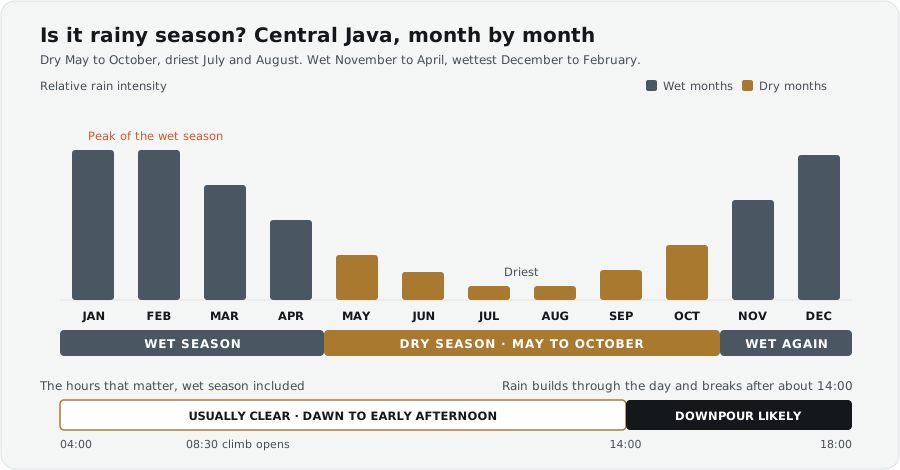
Central Java is dry May to October and wet November to April. The rain arrives in afternoon downpours, not all day, which is why an early Borobudur visit works year round.
 By Dewi Lestari, Borobudur temple tour guide since 2022
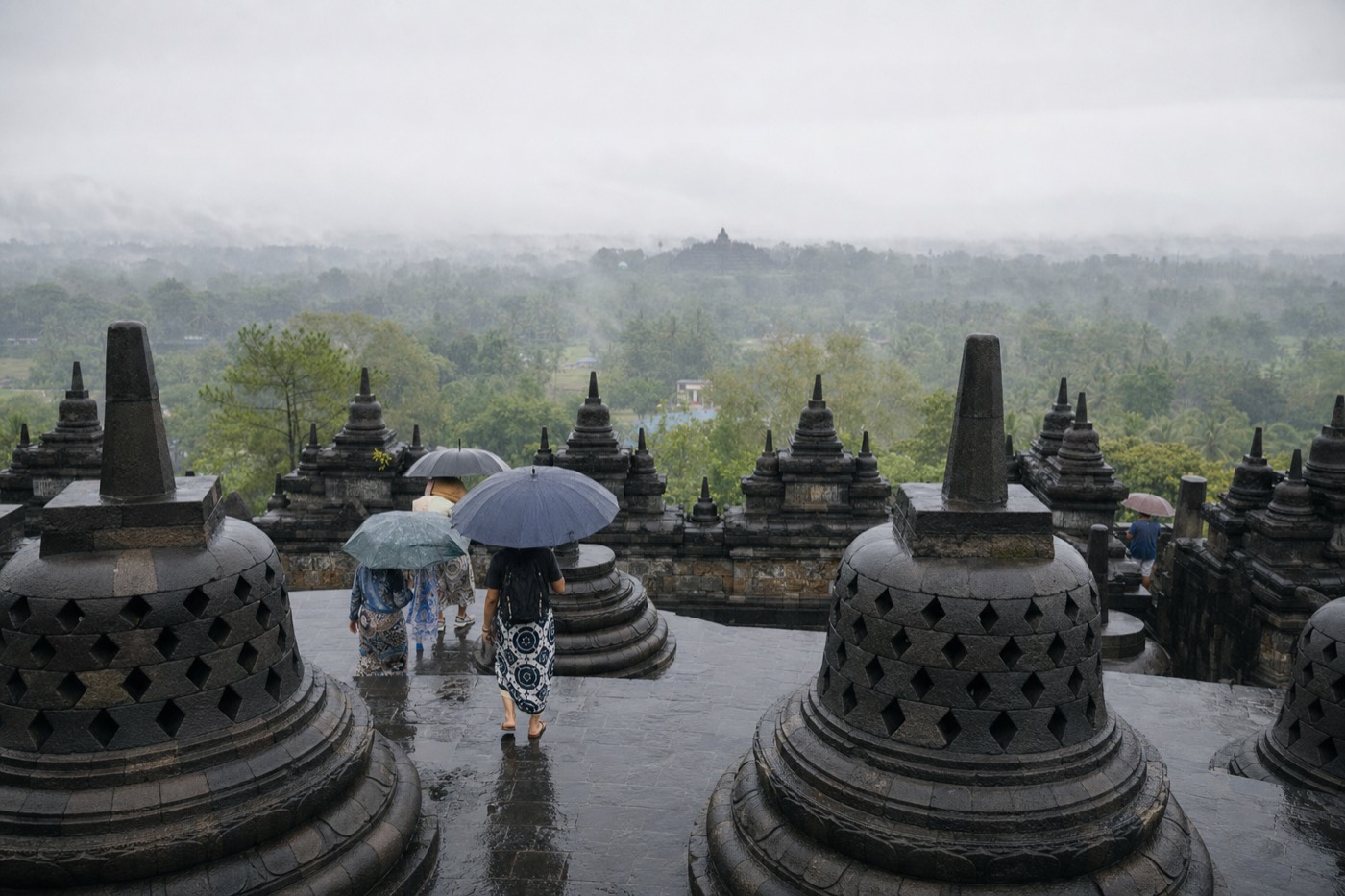
The rain here has a schedule, and after a few seasons you stop checking the forecast and start checking the clock. In December I have walked the terraces at eight in the morning under a sky so clean it hurts to look at, and by half past two the whole Kedu Plain has vanished behind a grey wall moving in from Merapi. Nobody who lives here calls that a rained-out day. They call it Tuesday. The question travellers ask, whether it is rainy season right now, has an answer, but it is a calendar answer rather than a weather report.
Is it rainy season in Indonesia right now?
That depends on the date you are reading this, and I cannot know it, so here is the pattern instead. Central Java, where Borobudur sits, is dry from May to October and wet from November to April. July and August are the driest months. December to February are the wettest. Those two seasons are reliable enough to plan against.
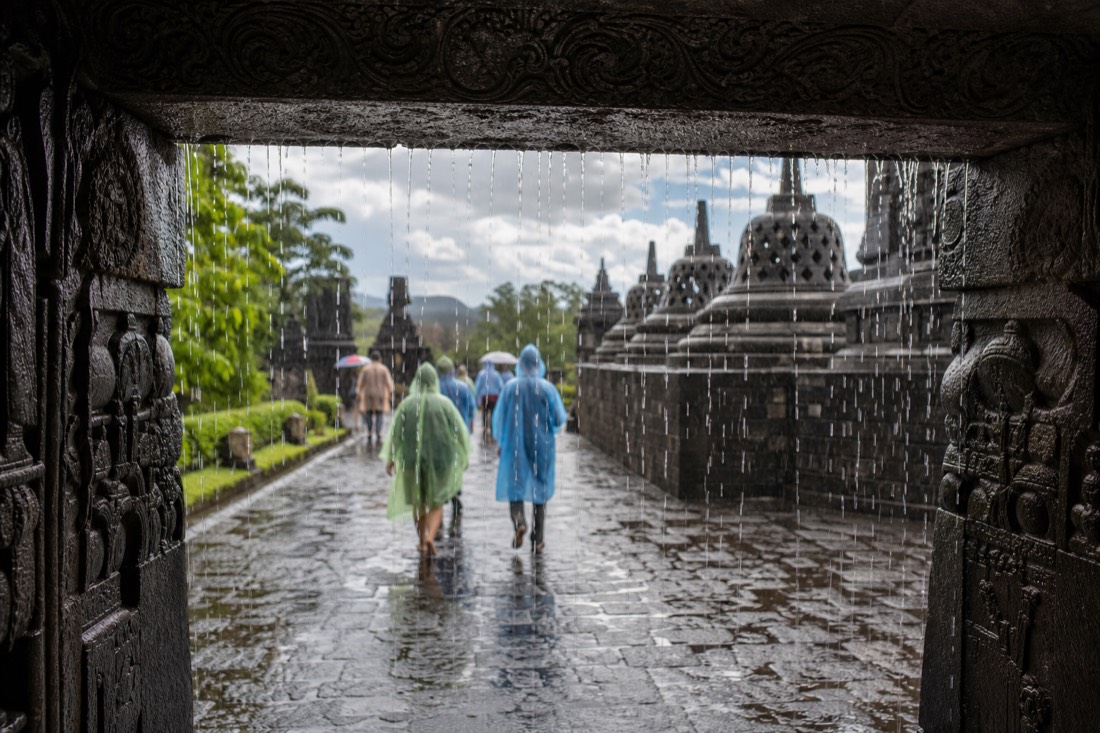
I want to be honest about the limits of this page. Anything claiming to tell you today's weather in an article written months ago is guessing at you. What I can give you is the seasonal machinery, which barely changes: two monsoons, a dry half and a wet half, with the transitions blurring at the edges in April and November.
Indonesia straddles the equator, so it has no spring or autumn in any sense you would recognise. It has a wet season and a dry one, and their timing shifts across the archipelago. Central Java's version is the one that matters for a Borobudur trip.
Which months are dry and which are wet in Central Java?
Dry season runs May through October, with July and August the driest and the most settled. Wet season runs November through April, peaking December to February. April and November are transition months that can behave like either. Java's dry season is genuinely dry, not merely "less rainy".
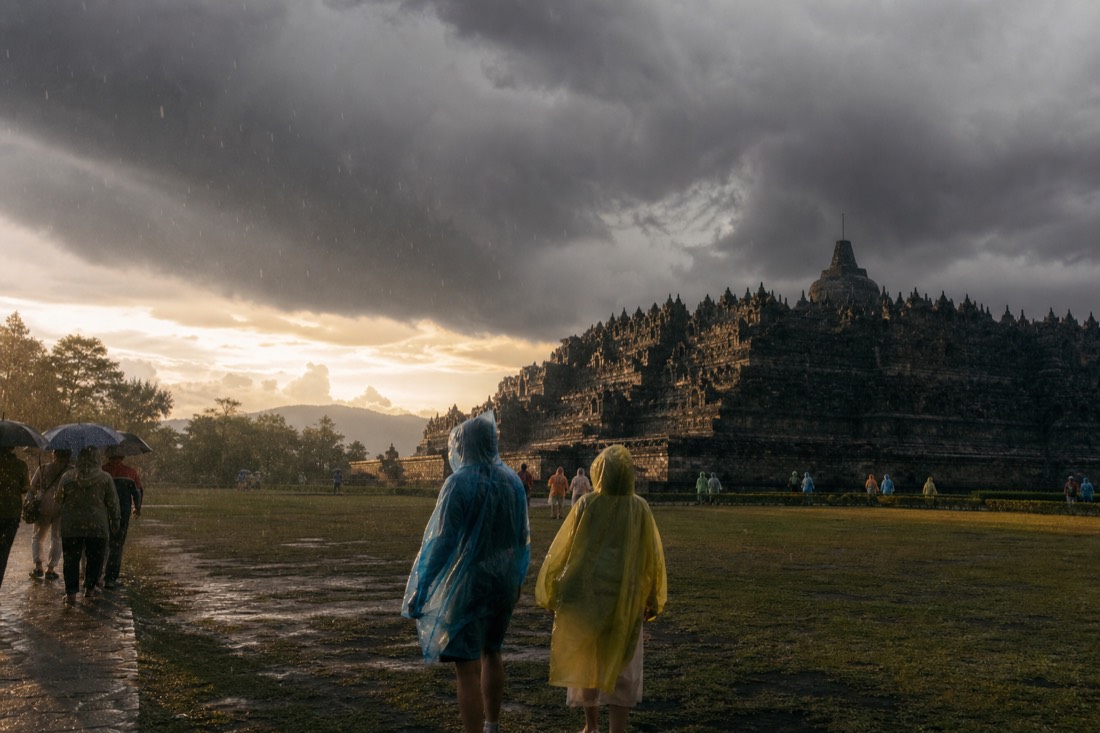
Here is the year as I actually experience it guiding, month by month.
| Month | Season | What it feels like on the terraces |
|---|---|---|
| January | Wet, peak | Heavy afternoon rain most days, humid, dramatic skies |
| February | Wet, peak | The wettest stretch; mornings still often clear |
| March | Wet | Rain easing slightly, still an afternoon event |
| April | Transition | Genuinely unpredictable; can go either way |
| May | Dry begins | Air dries out, afternoons stabilise |
| June | Dry | Reliable, warm, comfortable |
| July | Dry, driest | The most settled month, and the busiest |
| August | Dry, driest | Dry and dusty, hazy afternoons, peak crowds |
| September | Dry | Still dry, crowds thinning |
| October | Dry ends | First storms possible late in the month |
| November | Transition | Wet season arrives, usually mid to late |
| December | Wet, peak | Daily downpours, lush plain, thin crowds |
Notice that the crowd column runs almost exactly opposite the rain column. That is the trade nobody mentions: the driest months are also the ones where you share the top terrace with the most people.
What time of day does it rain in Indonesia?
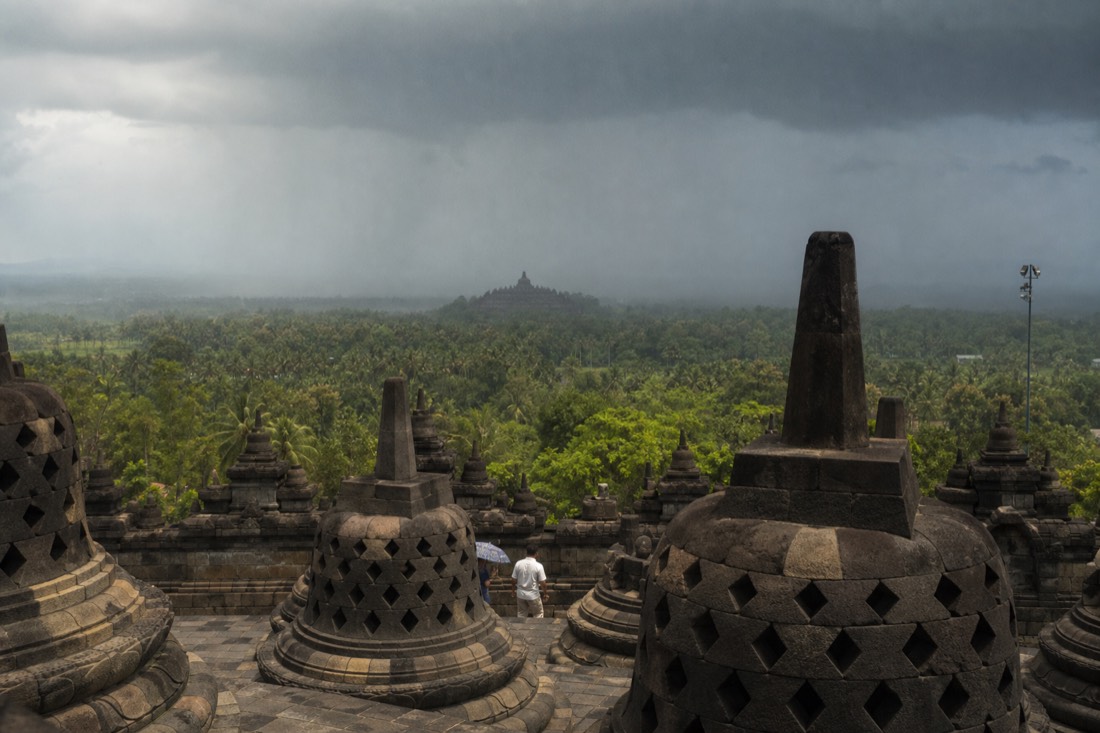
Afternoon and evening, overwhelmingly. Even in the wettest weeks the rain tends to build through the day and break after about two in the afternoon, as heat pushes moisture up over the volcanoes. Mornings in the wet season are frequently clear. This single fact rescues a wet-season Borobudur visit.
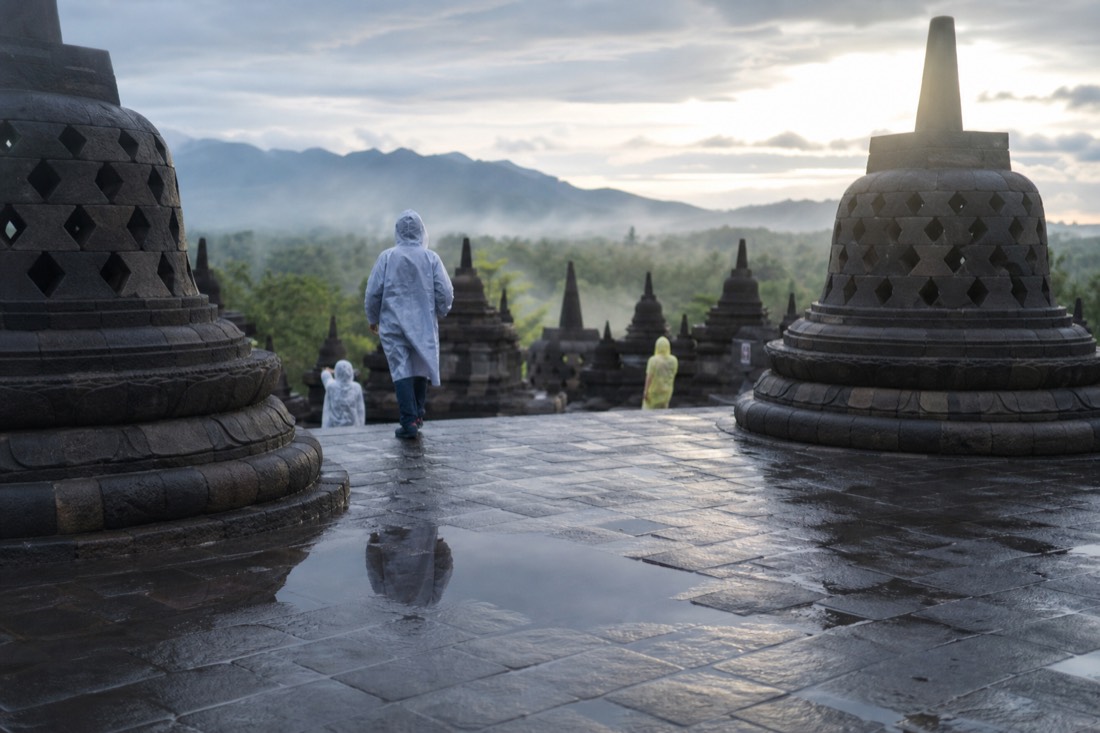
This is the most useful thing on this page and the thing travel sites most consistently omit. "Rainy season" gets read as "it rains all day", and so people cancel Java trips over it. That is not the pattern. The pattern is convective: the sun heats the plain through the morning, moisture rises, cloud towers stack up over Merapi and Merbabu, and the whole thing collapses into a downpour in the afternoon. It is often over within an hour or two.
| Time window | Wet season, typical | Dry season, typical |
|---|---|---|
| 04:00 to 07:00 | Often clear, sometimes misty; cool | Clear, cool, best light |
| 07:00 to 11:00 | Frequently clear, building cloud | Clear and warming quickly |
| 11:00 to 14:00 | Cloud thickening, humid | Hot, open sun, hazy in August |
| 14:00 to 18:00 | Downpour likely, often heavy | Warm, mostly dry, occasional cloud |
Read that table as an instruction, not a description. If you are visiting Central Java between November and April, the answer is not to avoid the season. It is to get your outdoor hours done before lunch.
Those forecasts come from Indonesia's climatology service via the Yogyakarta provincial disaster agency, and they are worth reading for what they confirm rather than what they surprise you with. An early onset and a January peak is the ordinary pattern arriving a fortnight ahead of schedule. The season did not change shape.
Book the day tour
Rather skip the 3am alarm?
The daytime Borobudur climb with Candi Mendut and Prambanan, no pre-dawn start, hotel pickup included. Free cancellation up to 24 hours, reserve now and pay later: booking takes 2 minutes and costs nothing today.
Check live availability & prices →Does rainy season ruin a Borobudur visit?
No, provided you go early. Borobudur opens every day of the year and rain is not a closure. The structure climb runs 08:30 to 17:00, so a wet-season morning climb sits almost entirely inside the clear window. What the rain genuinely threatens is the dawn view from Punthuk Setumbu, which is a different product.
Split the risk honestly, because the two things behave differently.
A daytime climb in the wet season is a low-risk proposition. You are on the terraces from mid-morning, the rain is not usually due for hours, and if it arrives you have already seen the monument. The climb guide covers what the ticket includes and how long the ascent takes.
A dawn tour is a different bet. The tours watch sunrise from Punthuk Setumbu, a hill about 2.5 km from the monument, and the whole point is the view across to Borobudur with the plain in mist. That view is weather-dependent. Cars leave Yogyakarta around 03:30, sunrise on the Kedu Plain lands near 05:30 most of the year, and in the wet season you may reach the hill and find nothing but cloud. The sunrise guide sets out what the hill actually delivers, and Borobudur in the rain goes further into what a wet visit costs and gives you.
| Wet season, Nov to Apr | Dry season, May to Oct | |
|---|---|---|
| Temple open | Every day | Every day |
| Morning climb, 08:30 onward | Usually fine, rain is later | Fine, hot by mid-morning |
| Setumbu dawn view | A genuine gamble | Reliable, and busy |
| Crowds on the terraces | Noticeably thinner | Heaviest in July and August |
| The plain itself | Green, misty, dramatic | Dry, dusty, hazy by August |
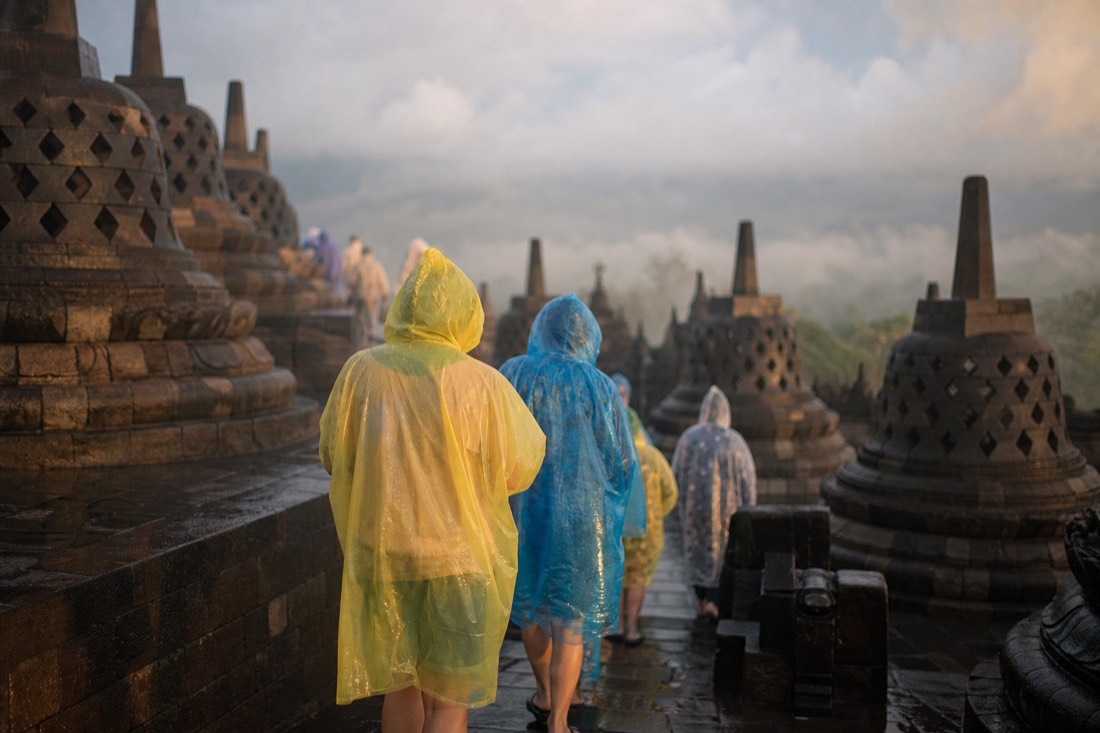
| Stone underfoot | Can be slick in the sandals | Dry, grippy |
If the dawn view is the reason you are coming to Java, book it in the dry season and give yourself the odds. If it is a bonus, the wet season will hand you a quieter temple and a greener plain in exchange.
Which months are best for Borobudur?
May, June and September, in that order. They sit inside the dry season without carrying the July and August crowd peak or August's haze. If you can only travel in the wet season, come anyway and go early, because a wet-season morning is usually clearer than the internet lets you believe.
The received wisdom says July and August, and it is not wrong about the weather. It is just incomplete. Those are the driest months and also the busiest, which are two ways of saying the same thing about who else booked. Borobudur drew about 1.3 million visitors in 2024, and they are not spread evenly across the calendar.
May and September are the honest sweet spots. You get dry-season reliability at the shoulder, with the plain still green in May from the rain that just left, and thinning crowds in September. June is the safest all-round choice if you want no complications at all.
How should you plan a Borobudur day around the rain?
Book the earliest start you can and treat the afternoon as flexible. Both of my day itineraries are built this way already: outdoor work in the morning, and by the time the wet-season sky is thinking about opening up, the climbing is behind you.
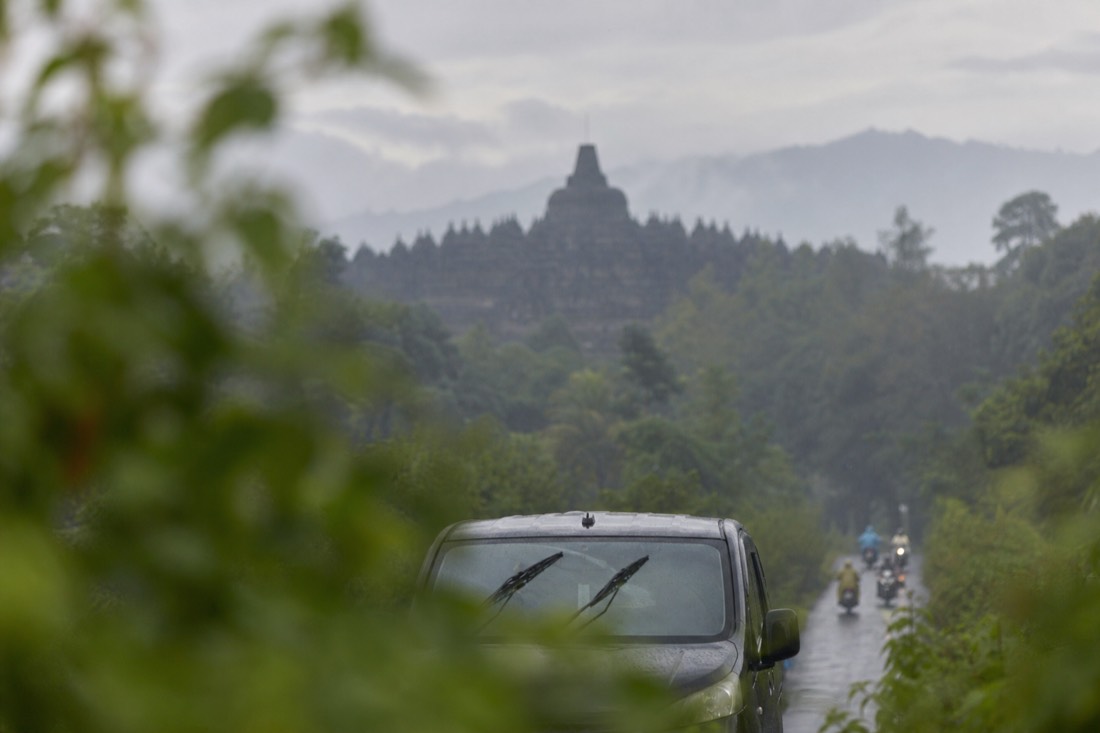
The mechanics are simple. In the wet season, front-load. Do Borobudur first, keep Prambanan for after, and accept that if the sky breaks at three you will be looking at a Hindu temple complex in the rain, which is a considerably better outcome than being on a slick stone terrace in it.
The Borobudur Climb & Prambanan Day Tour is the low-drama option for wet months: about eight hours, a civilised start, Candi Mendut added, and no sunrise view to lose to cloud. If you want the dawn attempt regardless, the Borobudur Sunrise Climb & Prambanan is the most-booked trip I run, and you can check live availability & prices on GetYourGuide. Just book it knowing what the season can do to a view.
One last practical note that has nothing to do with rain and catches people anyway: the terraces have no shade in any season, and you climb in the Upanat sandals issued with your ticket. Whether the sky is delivering sun or water, you are exposed to it. What the clothing rules actually say covers that, and the operator's ticketing page confirms the hours the climb runs, every day, wet or dry.