Guides · The climb
Climbing Borobudur in 2026: Access Rules, Sandals, and the Quota Myth
The climb closed, reopened, changed rules, and left the internet a museum of outdated advice. Here is the current system, checked against the operator, including what actually happened to the famous 1,200-a-day quota.
 Written with Dewi Lestari, Borobudur temple tour guide since 2022
Short answer
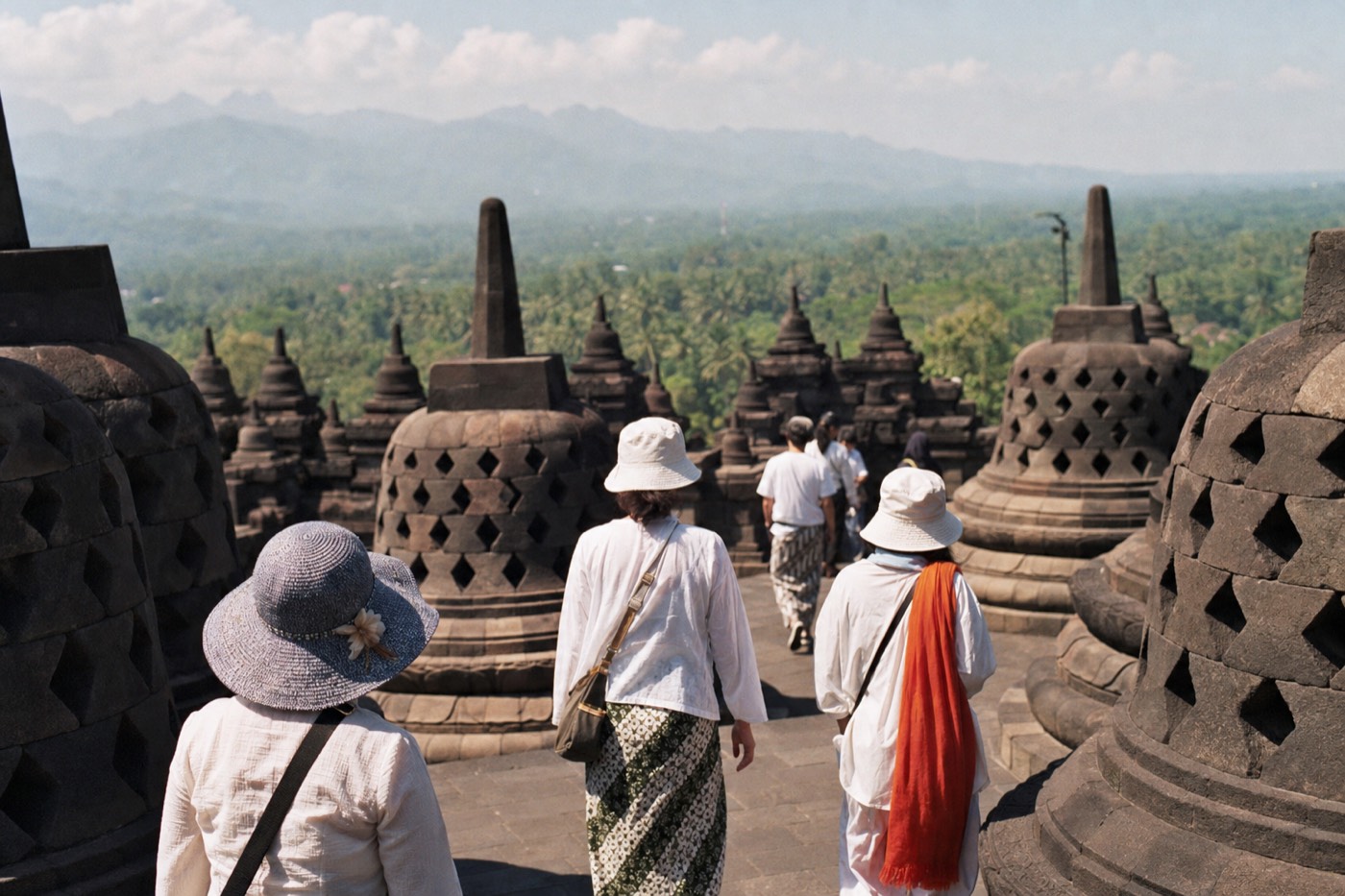
Yes, you can climb Borobudur, every day of the week, 08:30 to 17:00. You need the structure-climb ticket rather than grounds entry, and it comes with two things that are not optional: a guide and the Upanat sandals that protect the stone. No official daily quota exists for the regular climb; only the 04:00 sunrise slot is capped, at 100 people.
Why the internet is so confused about this
The climb went through restricted years, capped years, and a staged reopening, and each phase left its own layer of blog advice behind. Since the third week of July 2025 the climb runs every day of the week, on a dedicated structure ticket, and most of what you will read elsewhere describes an earlier phase.
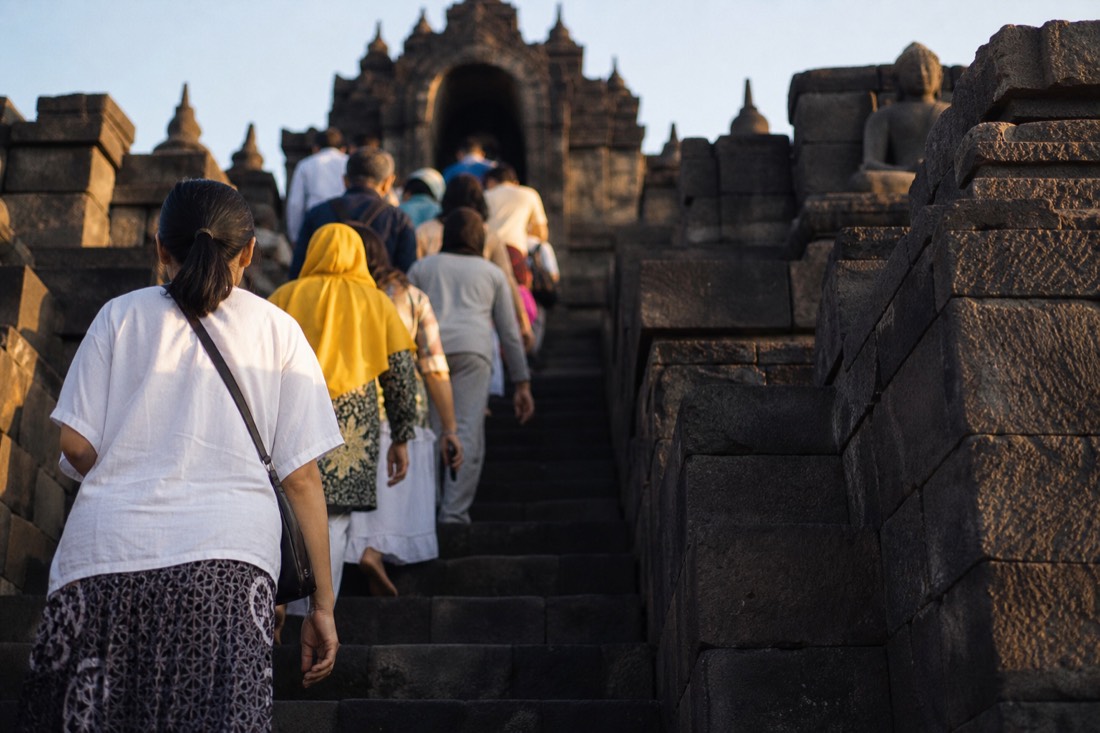
Borobudur's climb access genuinely did change several times in recent years, including a long stretch of restricted access during conservation work. Every phase of that history left a layer of blog posts behind it, each describing rules that were true when written. The result is that a 2026 search still surfaces pages saying the top is closed, pages saying Mondays are off, and pages quoting a strict daily cap. All three were once true-ish. None survives contact with the operator's current published rules.
Two changes matter most. Since the third week of July 2025, the climb runs every day, Mondays included; the operator's director said in the official announcement that "there are no longer any restrictions on the day". And access is organised through a dedicated structure-climb ticket rather than general admission, which is what the tour listings mean when they sell confirmed climb access.
What the climb ticket gets you
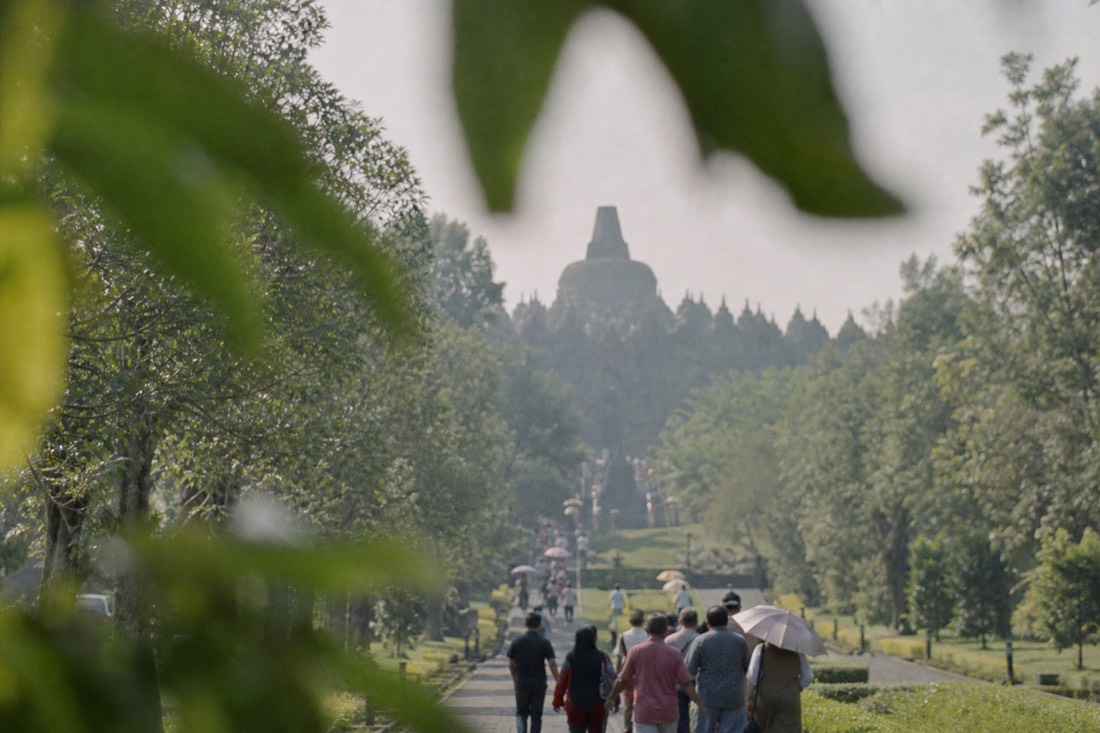
One ticket covers the four things the climb requires: access to the upper structure, a wristband, the mandatory Upanat sandals you keep afterward, and a tour guide. The inclusions are published verbatim on the operator's ticketing page.
| Access | The temple's upper structure: the gallery terraces, the relief panels, the stupa platforms at the top |
|---|---|
| Guide | Included in the ticket. The climb is guided as part of how access is run |
| Footwear | Upanat sandals, included, mandatory on the stone, yours to keep |
| Hours | Every day, 08:30 to 17:00 |
| Price | IDR 150,000 domestic; the foreign price is shown in the official booking flow |
Inclusions quoted from the operator's ticketing pages, July 2026. The tickets guide has the full pricing picture. {: .small}
When you can actually be on the monument
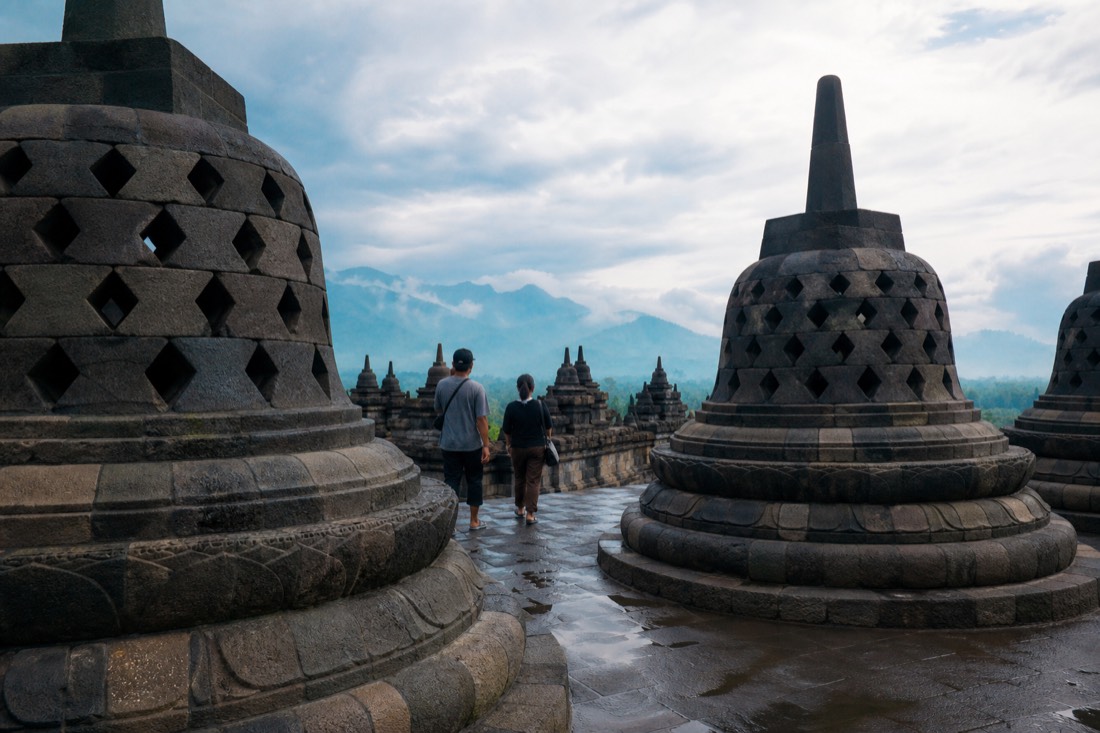
Three access products, three windows: the 04:00 sunrise slot on the monument, the ordinary structure climb from 08:30 to 17:00, and the grounds from 06:30 to 16:30, every day of the week.
| 04:00 | Official sunrise product, on the structure. Capped at 100 people, flashlight and Manohara breakfast included |
|---|---|
| 06:30–16:30 | Grounds open (grounds-only entry is domestic-only) |
| 08:30–17:00 | Structure climb for all climb-ticket holders, every day including Monday |
Book the sunrise climb
Ready to book the sunrise climb?
Dawn from Punthuk Setumbu, then the Borobudur climb itself, with hotel pickup from Yogyakarta. Free cancellation up to 24 hours, reserve now and pay later: booking takes 2 minutes and costs nothing today.
Check live availability & prices →The Upanat sandals, and why they exist
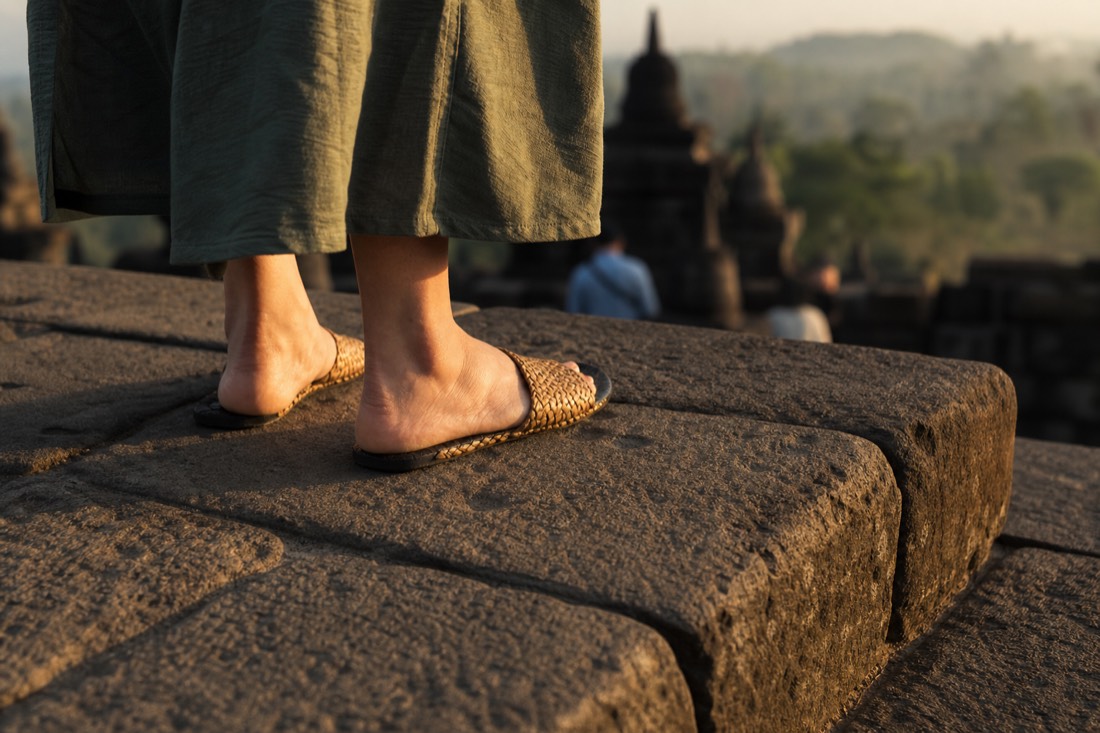
The one rule every climber meets is on their feet. Upanat are woven sandals issued with the climb ticket, and the operator's language is unambiguous: all visitors on the structure wear them. The reason is conservation arithmetic. A ninth-century staircase and a few thousand pairs of hiking boots a day are a bad combination, and the soft-soled Upanat cut the abrasion. You keep the pair afterward, which makes them the only souvenir at Borobudur that is also a rule. What you wear above the ankles is genuinely up to you; there is no official dress code, a fact odd enough that we gave it its own page.
The 1,200-a-day quota: real once, not published now
The famous 1,200-per-day climb cap was a real rule as recently as 2024, when reporting described weekend demand hitting the cap while ordinary weekdays drew 300 to 500 climbers. It is not in force as a published rule today: the operator's July 2025 announcement removed day restrictions and reported Monday trials of 3,000 to 4,000 climbers.
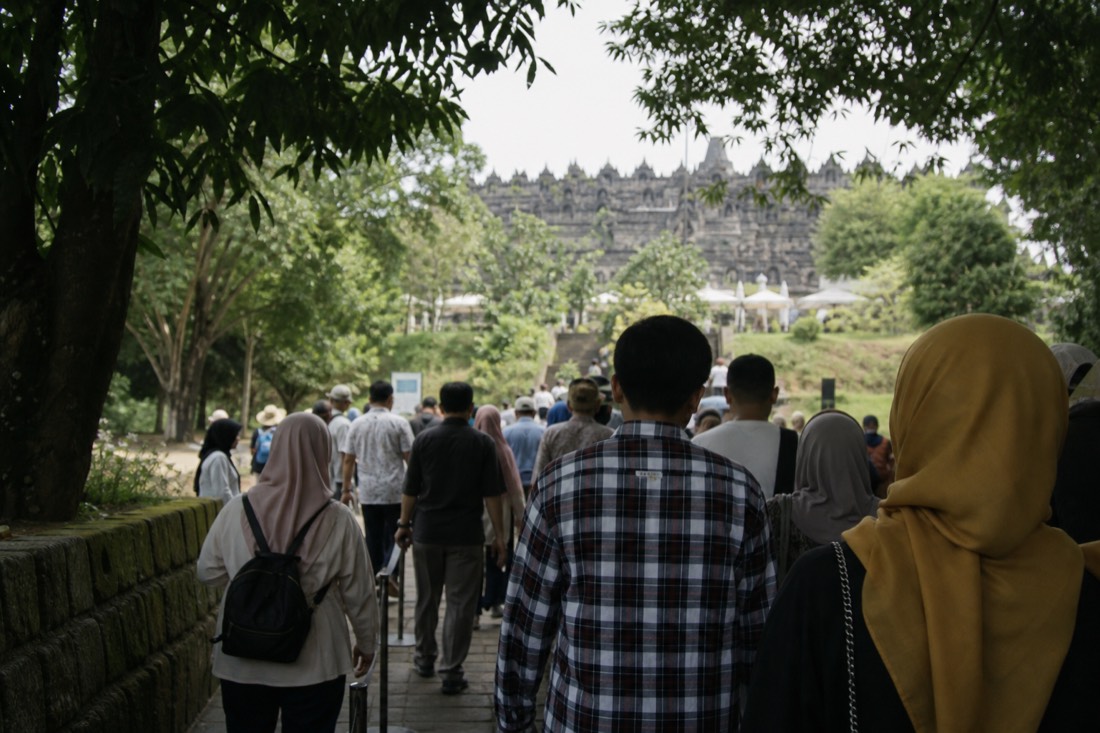
That history explains the mess you will read. Tour listings still market a "climb up guarantee" against a strict daily cap, and pages written during the capped years repeat 1,200 as if it were current. Both were right once. What matters for your trip is the current state, so here is the documented sequence.
| Through 2024 | Structure access capped at 1,200 climbers a day, with the cap actually binding on weekends and holidays; typical weekdays saw 300 to 500 climbers |
|---|---|
| July 2025 | The operator opens climbing every day of the week and reports Monday trial days of 3,000 to 4,000 climbers, with larger capacities under study |
| Today | No daily quota is published on the operator's ticketing pages for the ordinary climb. The one published cap is the 04:00 sunrise product: 100 people a day |
So the scarcity framing survives because it used to be true and because it sells tours. We do not repeat it. What is real: structure access is a separate, controlled ticket, dawn slots genuinely are limited, and the official sunrise product carries a published cap of 100 people. If you want certainty for a specific date, that is what booking confirmed climb access on a tour or the official flow gives you, and it is worth having for the certainty alone, not because the mountain is nearly sold out.
What the climb is like
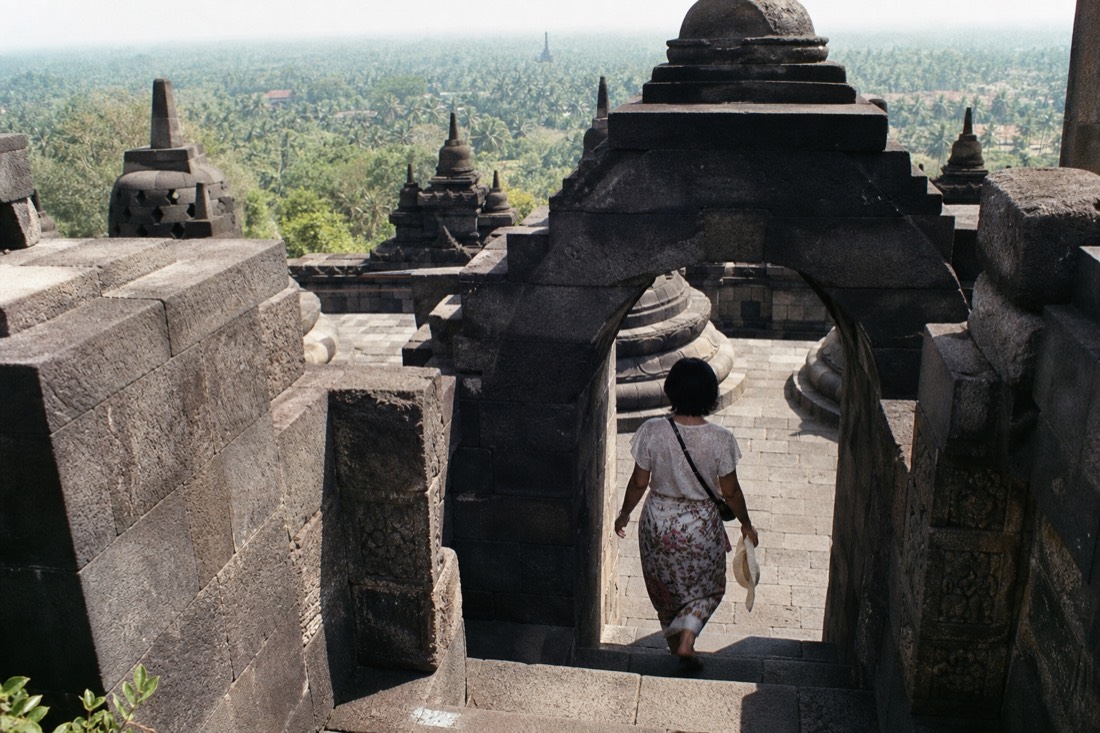
Short, steep, and hot rather than hard: worn ninth-century stairs up through six square gallery terraces and three round platforms, with your guide alongside and the Upanat sandals on your feet. Fitness is rarely the limit; sun, water, and footing are the real variables.
From the base, it is stairs: steep, uneven, ninth-century stairs, climbed in the company of your guide. The structure rises through square gallery terraces walled with 1,460 narrative relief panels, then opens onto the round upper platforms where the bell-shaped stupas sit against the sky. Dewi's standing advice is to resist the summit sprint. The panels are the point; they carry a story that starts at the bottom, and visitors who walk even one gallery in order come down understanding why this pile of stone needed seventy-odd years to build.
Physically, budget for heat and height rather than difficulty. The climb itself is short. Doing it at 11:00 in full sun with no water is the mistake people actually make, which is why the best-time guide spends so long on hours of the day, and why most tours put you on the terraces in the morning. If you want the climb handled end to end, the most-booked option is the Sunrise Climb & Prambanan tour; check live availability & prices on GetYourGuide.
Which ticket do you actually need: grounds or structure?
Two tickets exist, and only one gets you onto the monument. The grounds ticket buys the park and courtyard around the temple; the structure-climb ticket buys the ascent itself, and it arrives bundled with a guide and the mandatory Upanat sandals. Foreign visitors cannot buy grounds-only entry: that tier is sold to domestic visitors.
| Grounds ticket (Pelataran) | Structure climb (Naik Struktur) | |
|---|---|---|
| What it allows | The park and courtyard at the base, photos from below, no ascent | The full upper structure: gallery terraces, relief panels, the stupa platforms |
| Guide | Not included | Included, part of how climb access is run |
| Upanat sandals | Not issued, you are not on the stone | Issued, mandatory, yours to keep |
| Hours | 06:30 to 16:30 | 08:30 to 17:00 |
| Who can buy it | Domestic visitors only | Domestic and foreign visitors |
These two tickets look almost identical in a search result and behave nothing alike. The grounds product, sold as Pelataran, lets you walk the park, see the base up close, and shoot the temple from below. It never puts a foot on the stairs. As a foreign visitor you will not be offered it on its own anyway: the grounds-only tier is a domestic product, and the official booking flow routes overseas passports straight to the climb ticket. So the real choice most travellers face is not "which of the two," it is simply whether you booked the structure ticket at all. That is the one carrying the ascent, the guide, and the sandals as inclusions rather than add-ons, which is exactly why its price sits above plain admission. The tickets guide holds the current numbers on both tiers; the point here is which door each one opens.
How physically demanding is the climb, and who might struggle?
Fitness is rarely what stops people. Steep, uneven original stone, real heat, and no lift are the honest variables, so joints, balance, and sun tolerance matter more than cardio. Anyone steady on stairs manages it; knees that dislike a long descent, or a wheelchair, are where the monument pushes back.
The climb is short. What makes it feel like effort is the surface underfoot and the sky overhead, not the number of steps. These are ninth-century stairways, cut steep, with risers that vary from one flight to the next, so your feet never fully settle into a rhythm. Coming down is usually harder on the body than going up, which surprises people who braced for the ascent and forgot the return. Add the equatorial sun on the open upper terraces, where shade is thin, and the day's heat does more to tire visitors than any gradient.
| Consideration | What it means on the day |
|---|---|
| Knees and hips | Steep, uneven risers; the descent taxes the joints more than the climb up |
| Heat and sun | Little shade on the upper terraces at midday; water and a morning slot beat raw fitness |
| Balance and footing | Worn stone plus the flat Upanat soles reward slow, deliberate steps |
| Limited mobility | No lift and no ramp to the upper structure; the grounds stay level and rewarding |
| Small children | The steep steps, not any published age rule, are the real limit |
None of this is medical advice, and plenty of older travellers climb happily by pacing themselves and picking a cool hour. If stairs are genuinely off the table, the grounds and park still give you the temple at close range, and the view of the monument rising from the plain is no small thing. For everyone else the fix is timing: the best-time guide exists mostly because the hour you climb decides how hard the climb feels.
The climb mistakes Dewi sees most weeks
Since 2022 I have taken more than a thousand people up these stairs, and the same handful of mistakes cost them the climb every week. Wrong footwear underneath the Upanat, arriving in the midday furnace, racing the panels, and reading the reliefs out of order: none is dramatic, and all four are avoidable.
The footwear one catches people off guard. You keep your own shoes at the base and slip the Upanat sandals on for the stone, so what you wore to the park matters less than most think. Thick socks or a heavy boot left in a bag by the entrance, then bare feet fumbling with the sandal straps, slows a whole group. Come in something you can step out of in seconds and you will thank yourself.
Midday is the mistake I wish I could delete from the internet. Guests book an 11:00 climb because it fit their driver's schedule, then spend the ascent squinting and wilting instead of looking at the carvings. The stone throws heat back at you up there. Morning is cooler, the light is kinder on the reliefs, and the crowds are thinner, which is why nearly every tour I guide puts people on the terraces early.
Then there is the summit sprint. Visitors see the main stupa against the sky and want to be beside it, so they climb straight through the galleries without a glance. Those galleries hold the whole reason Borobudur was built. The reliefs tell a story that begins at the bottom and rises with you, panel after panel, and walked in order they turn a pile of old stone into something that makes sense. Walk them backward, or skip them, and you have climbed a very tall staircase for a photo. My steady request to every group is the same: slow down, read even one gallery the way it was carved to be read, and let the top be the reward rather than the whole trip.
Common questions
Can you climb to the very top?
Yes. The climb ticket covers the full structure, including the upper stupa platforms. Conservation practice can rope off specific spots at specific times, but the summit is part of the ticketed route.
Is there a daily quota?
Not a current published one for the regular climb. A 1,200-a-day cap genuinely applied through 2024, which is why it is quoted everywhere, but the operator removed day restrictions in July 2025 and publishes no quota today. The one live cap is the 04:00 sunrise product, at 100 people a day.
Do I need to book the climb in advance?
For ordinary daytime slots, buying on the day is normal, though tours bundle confirmed access so the question disappears. For the 100-person sunrise slot, advance booking is the whole game.
Can children climb?
Children visit with families routinely, and child tickets exist at the domestic tier. We found no published age restriction for the climb; treat the steep, uneven stairs as the real constraint for small children.