2026-06-16
Is Prambanan Hindu or Buddhist? And Why Borobudur Is the Opposite
Prambanan is Hindu and Borobudur is Buddhist, built in the same region within about a century of each other. What that overlap says about 9th-century Java.
 By Dewi Lestari, Borobudur temple tour guide since 2022
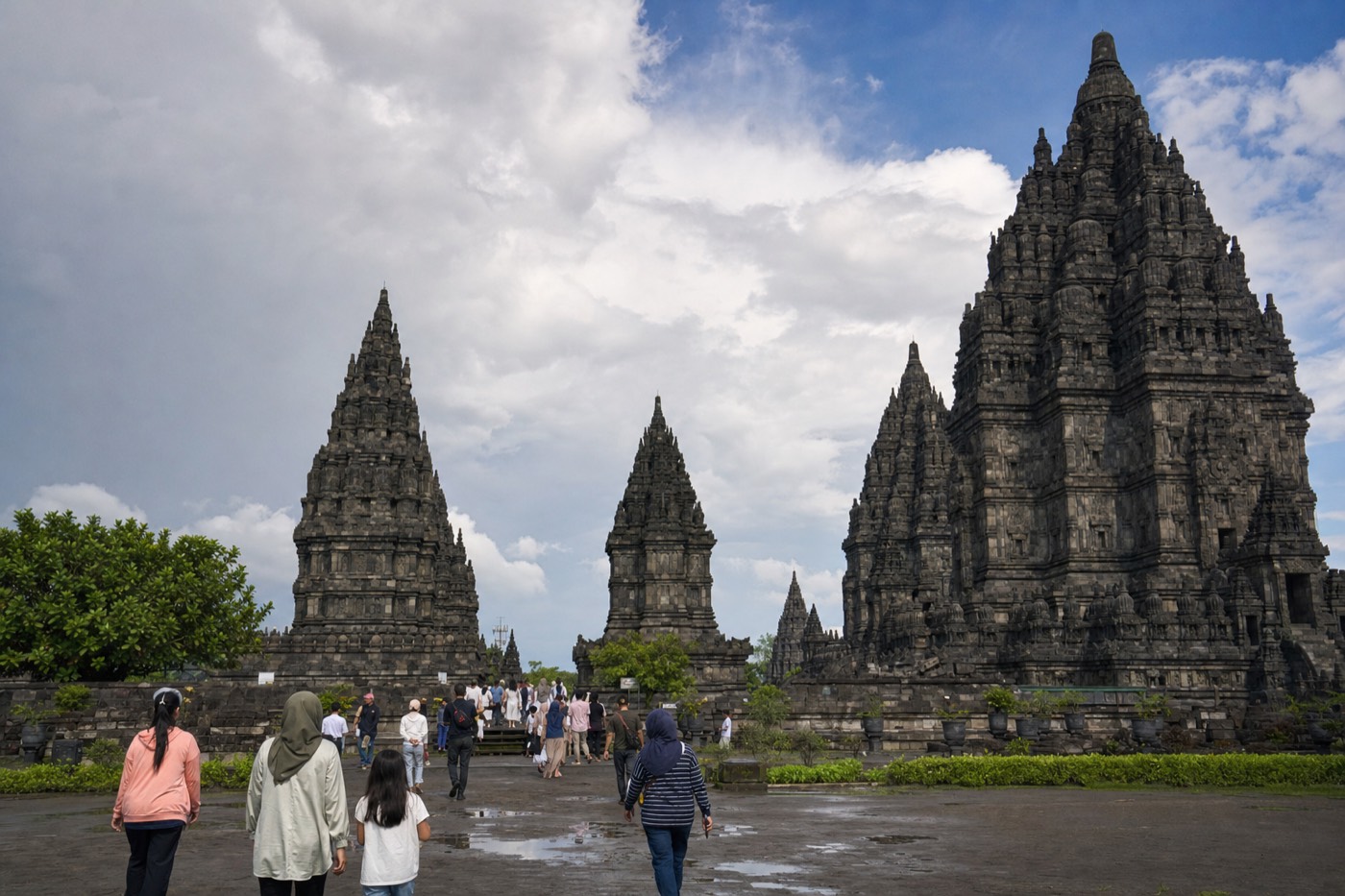
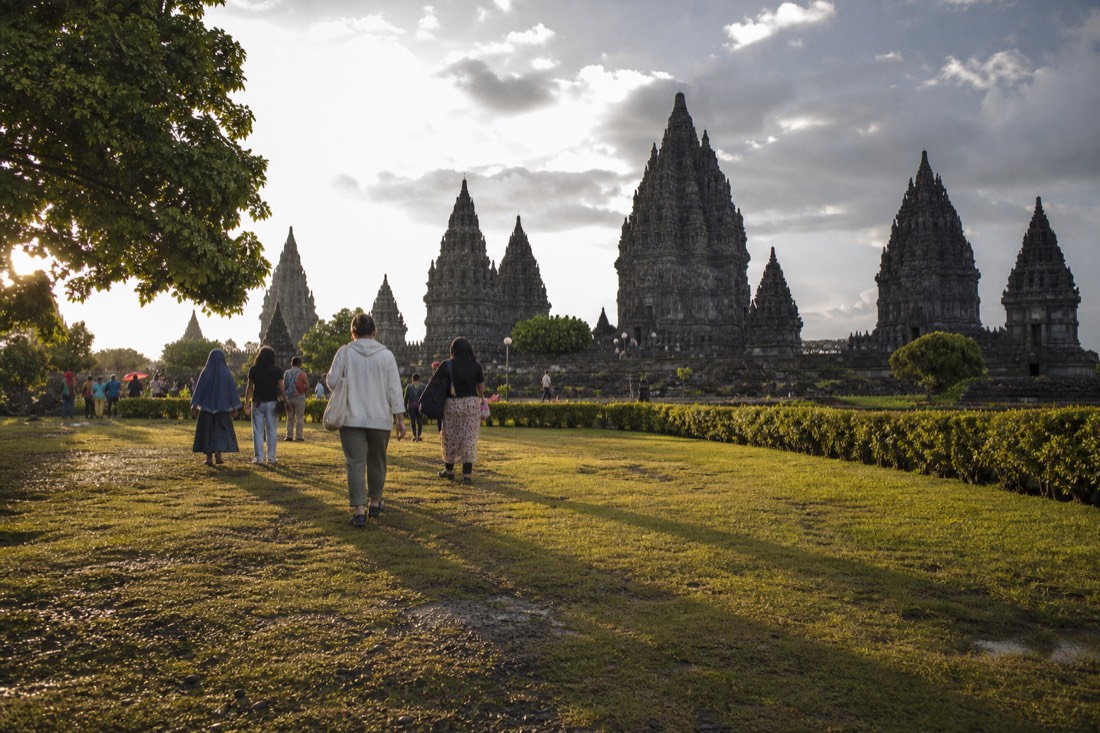
By four in the afternoon Prambanan's stone has gone the colour of weak tea and the spires look taller than they measured at noon. I have spent the morning of that same day on a Buddhist monument forty kilometres west, talking about desire and formlessness, and now I am standing in front of Shiva with a group who are quietly working out whether I have contradicted myself. Somebody usually asks it out loud on the walk back to the car park. Wait. Is this one Hindu?
Yes. And that question is not a mistake. It is the most useful thing a visitor asks me all day.
Is Prambanan Hindu or Buddhist?
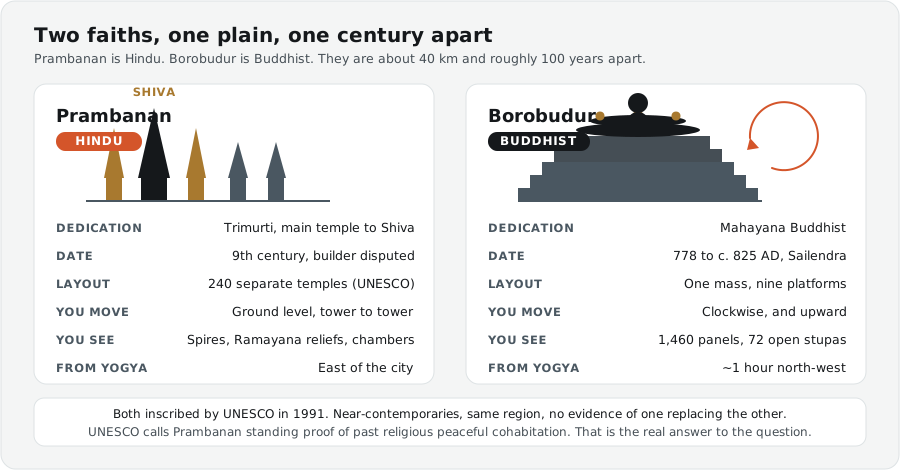
Prambanan is Hindu. The 9th-century compound east of Yogyakarta is dedicated to the Trimurti (Shiva, Vishnu and Brahma), with the main and largest temple given to Shiva. Borobudur, an hour to the west, is Mahayana Buddhist. They are different faiths, roughly a century apart, about forty kilometres from each other.
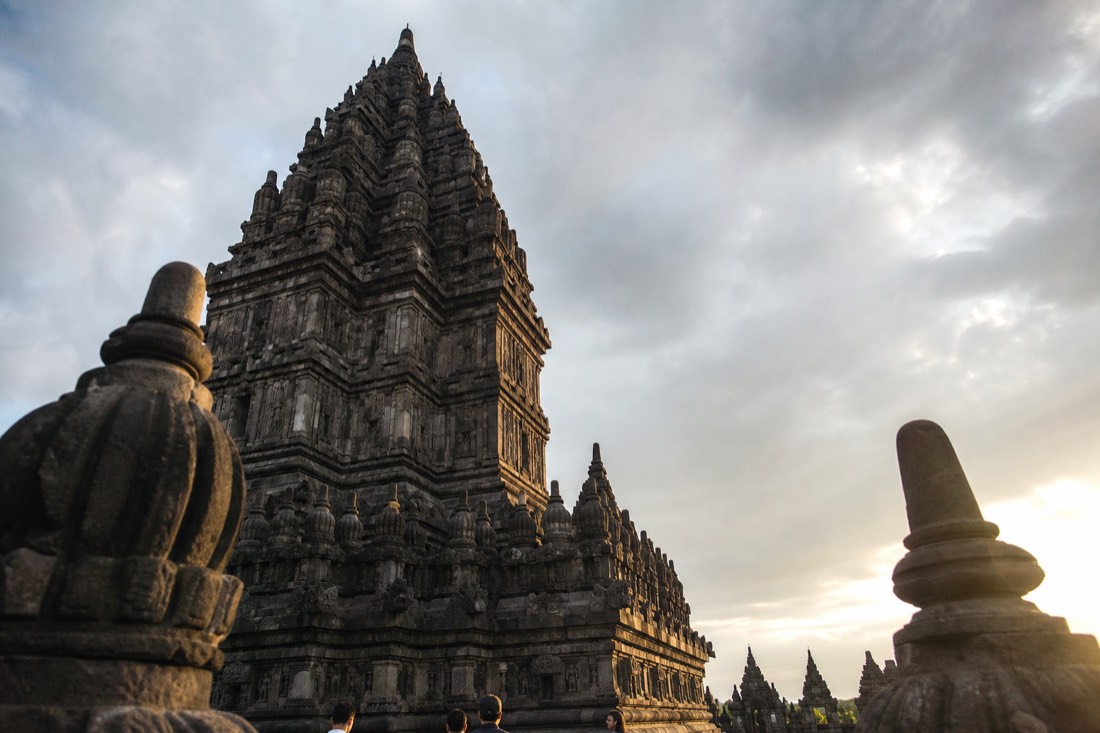
Both UNESCO and Britannica describe Prambanan the same way: a Hindu compound, Trimurti dedication, the central temple to Shiva. Locally it also carries the name Loro Jonggrang, from the legend of the slender maiden, which is worth knowing because you will hear it on site more than you will hear "Trimurti".
I should be straight with you about my own footing here. Borobudur is my temple. I guide there, I have read around it for years, and I will argue about its relief sequence with anyone. Prambanan I guide too, and I know it well as a working guide knows a site, but I am not going to perform expertise on Hindu iconography that I do not have. So what follows is a guide reporting what the sources say and what I can show you on the ground, and where the scholarship is unsettled I will tell you it is unsettled rather than pick the version that sounds tidiest.
Why do people think Prambanan is Buddhist?
Mostly because of company it keeps. Nearly every Yogyakarta day tour, including all three of ours, visits Borobudur and Prambanan together, so the two arrive in a visitor's head as one bundled experience. Add similar dark volcanic stone, a similar century, and the same plain, and the faiths blur.
The confusion is manufactured by the itinerary, not by the buildings. If you saw them a week apart you would never mix them up. Seen in one day, they are "the temples", and the second one inherits the label of the first.
There is a second reason, and it is more interesting. Central Java genuinely does have Buddhist and Hindu monuments sitting practically on top of each other. Candi Sewu, a large Buddhist temple, stands within the same UNESCO-listed Prambanan compounds. So a visitor who half-remembers hearing "there's a Buddhist temple here too" is not hallucinating. They are just attaching it to the wrong candi.
| Borobudur | Prambanan | |
|---|---|---|
| Faith | Mahayana Buddhist | Hindu, Trimurti, main temple to Shiva |
| Century | Begun 778 AD, completed c. 825 AD | 9th century (builder and exact date disputed) |
| Where | Magelang Regency, ~1 hour NW of Yogyakarta | East of Yogyakarta |
| Shape | One mass. Nine platforms you climb | Many separate towers you walk between |
| Movement | Clockwise and upward, one continuous route | Ground level, in and out of individual shrines |
| The record it holds | World's largest Buddhist temple | 240 temples in the compound, per UNESCO |
| UNESCO | Borobudur Temple Compounds, inscribed 1991 | Prambanan Temple Compounds, inscribed 1991 |
| What you actually look at | 1,460 narrative relief panels, 72 perforated stupas | Tall spired candi, Ramayana reliefs, Shiva's chamber |
When was Prambanan built, and by whom?
This is genuinely unsettled, and anyone who gives you one confident answer is overselling. The compound is 9th century. Beyond that, sources disagree: Britannica attributes it to Daksha in the early 10th century, UNESCO frames the compounds within the Sailendra period, and much scholarship credits the Sanjaya ruler Rakai Pikatan around 850 AD.
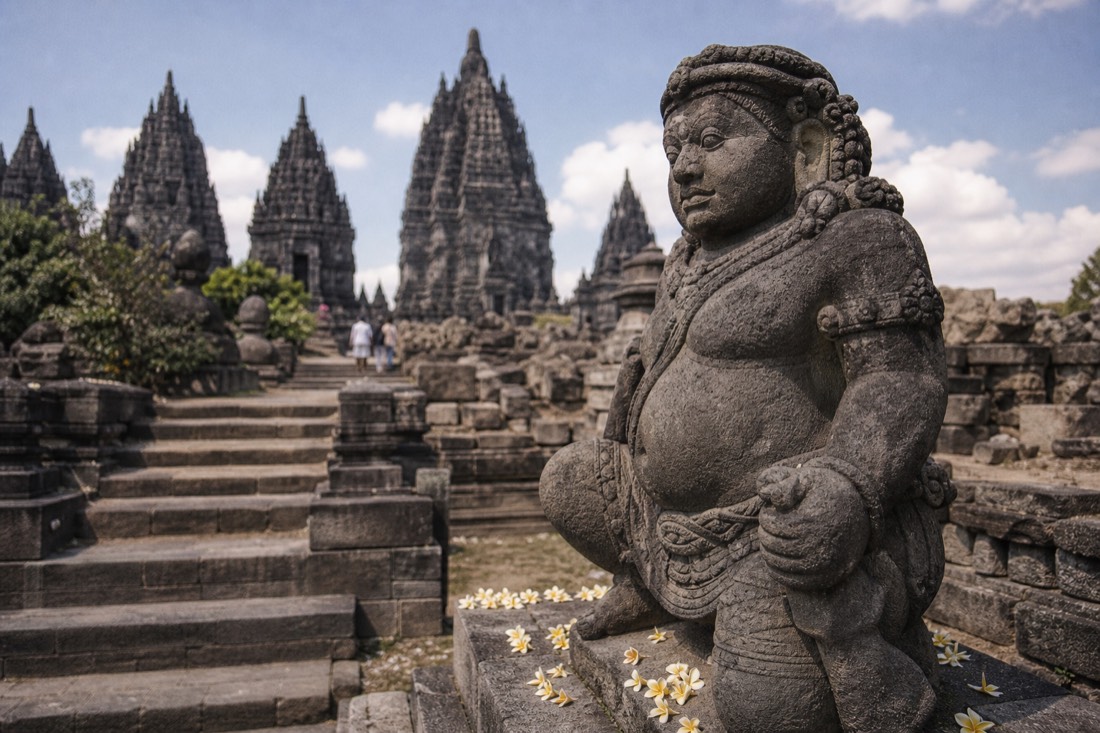
I find this the honest bit worth stopping on, because Prambanan pages online tend to state a builder and a year as though it were a settled matter. It is not. The disagreement is real and it sits between sources that are each perfectly respectable.
| Source | What it attributes | Date it implies |
|---|---|---|
| Britannica | Daksha | Early 10th century |
| UNESCO (Prambanan Temple Compounds) | Compounds within the Sailendra period; Loro Jonggrang dated to the 9th century | 8th to 9th century framing |
| Widely cited scholarship | Rakai Pikatan, of the Sanjaya line | Around 850 AD |
What survives all three: 9th century, Central Java, Hindu, and a scale that took a state to fund. That is the claim I will make on tour. The rest I hand over as a live argument, which is more interesting than a fake fact anyway.
One more honest gap. You will see a height in metres for the main Shiva temple quoted all over the internet. I checked it against UNESCO and Britannica and neither of them gives one, so I am not going to print a figure I cannot source. It is tall. Stand under it.
Book the volcano day
Ready for the full volcano day?
Setumbu sunrise, the Borobudur climb, a Merapi jeep ride, and Prambanan in one long day with hotel pickup. Free cancellation up to 24 hours, reserve now and pay later: booking takes 2 minutes and costs nothing today.
Check live availability & prices →Did Hindus and Buddhists fight over Java?
The evidence points the other way. UNESCO's own assessment of Prambanan calls the site standing proof of past religious peaceful cohabitation. Borobudur and Prambanan are near-contemporaries in the same small region, built by a society that had room for both, which is the genuinely remarkable fact underneath this whole question.
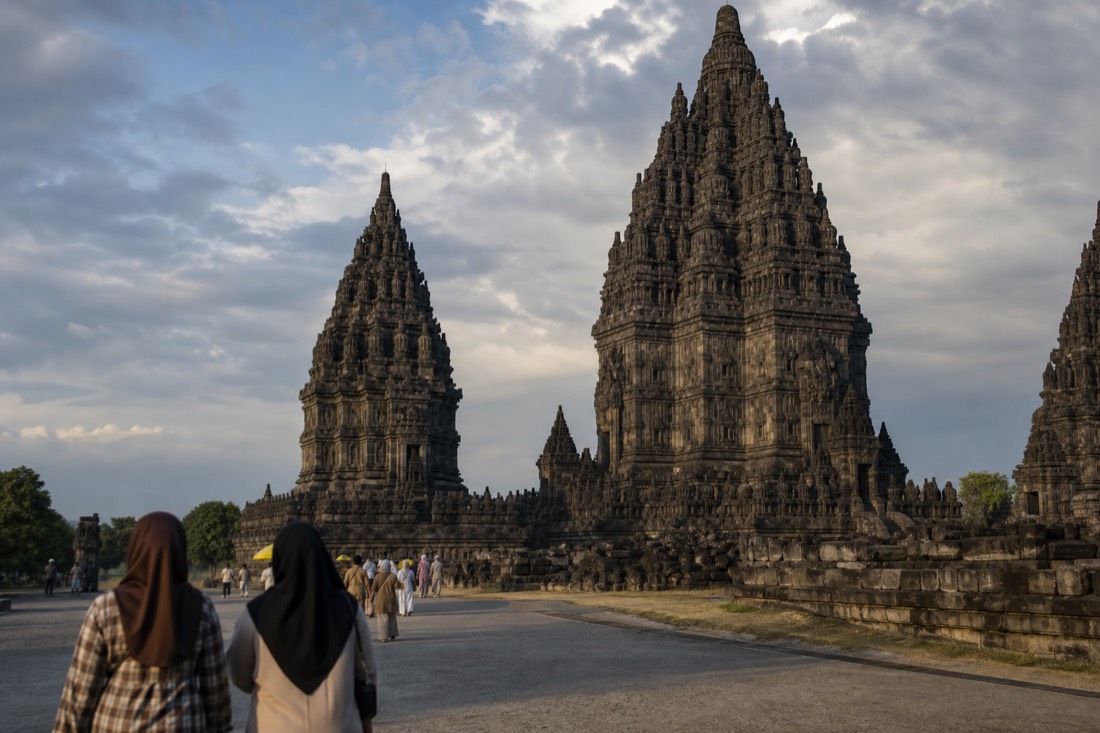
Here is why the Hindu-or-Buddhist question is better than the person asking it realises. The intuitive model of religious history is replacement: faith A rules, faith B arrives, faith A goes. Java in the 9th century did not do that. Within about a hundred years, on one plain, the same civilisation raised the largest Buddhist temple on earth and a Hindu compound of 240 temples, and there is no evidence of one erasing the other.
The political story is not simple, and I will not flatten it into a fable of harmony. The Sailendra and Sanjaya lines are usually discussed in terms of rivalry and transition, and scholars have argued for generations about alliances, intermarriage and who actually held what when. Power changed hands. But the buildings do not record a religious war. They record a plain where both were worth spending fifty years and a treasury on.
Stand on Borobudur's third gallery on a clear morning and you are looking across the country that also built Prambanan. Whatever the courts were doing to each other, the masons were busy on both.
What do you actually see at each one?
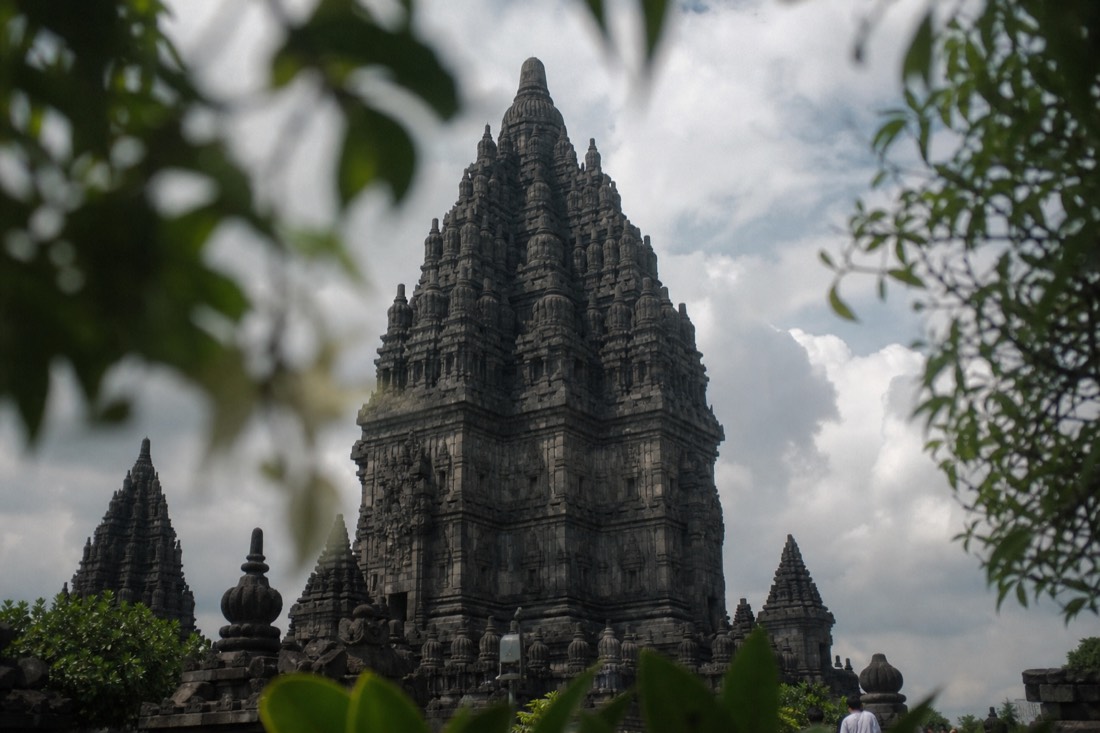
Borobudur is one object you climb; Prambanan is a field of buildings you walk between. Borobudur's story is carved in sequence along enclosed galleries. Prambanan's is in Ramayana reliefs and in the shrines themselves, and the experience is vertical, spiky and open rather than enclosed and spiralling.
The difference in how your body moves is the thing photographs never carry. At Borobudur you are in a corridor for an hour, walking clockwise with carved walls either side and a strip of sky above, and the reliefs only make sense in order. It is a route. I have written about why that sequence is the whole point in the history of Borobudur told from the terraces.
Prambanan does not route you. You cross open ground between towers, choose a doorway, climb a few steep steps into a dim chamber, come out, and cross to the next. The Shiva temple's chambers are the anchor, and the Ramayana panels reward the same slow clockwise reading Borobudur trains you for, but nothing forces the order. It is a place you wander; Borobudur is a place you follow.
Practically, that also means Prambanan is more forgiving. There is shade to duck into and no ticketed climb window to hit. After the discipline of the Borobudur galleries, most of my groups visibly relax there.
Should you visit both, or pick one?
Both, and on the same day if that is the time you have. They are close, every Yogyakarta tour pairs them, and the comparison is the point: one day gives you two religions, one plain, one century, and a piece of history that neither temple explains on its own.
I would genuinely argue against picking. Not because the tours bundle them, but because Prambanan is what makes Borobudur legible. Seeing only the Buddhist monument leaves you with a story about Buddhism in Java. Seeing both leaves you with a story about Java, which is the better story and the true one.
| If you have | What I would do | Why |
|---|---|---|
| One day, first visit | Borobudur in the morning, Prambanan late afternoon | Best light on both, and the contrast lands hardest in one day |
| One day, and you want the landscape too | Add the Merapi leg | The volcano is why this plain is fertile and why the stone is dark |
| Two days | Split them | You get 90 minutes on Borobudur's galleries instead of 45 |
| Half a day only | Borobudur, and read the reliefs | Prambanan without time is just spires |
| You dislike crowds | Prambanan late, Borobudur at opening | Both parks load up mid-morning |
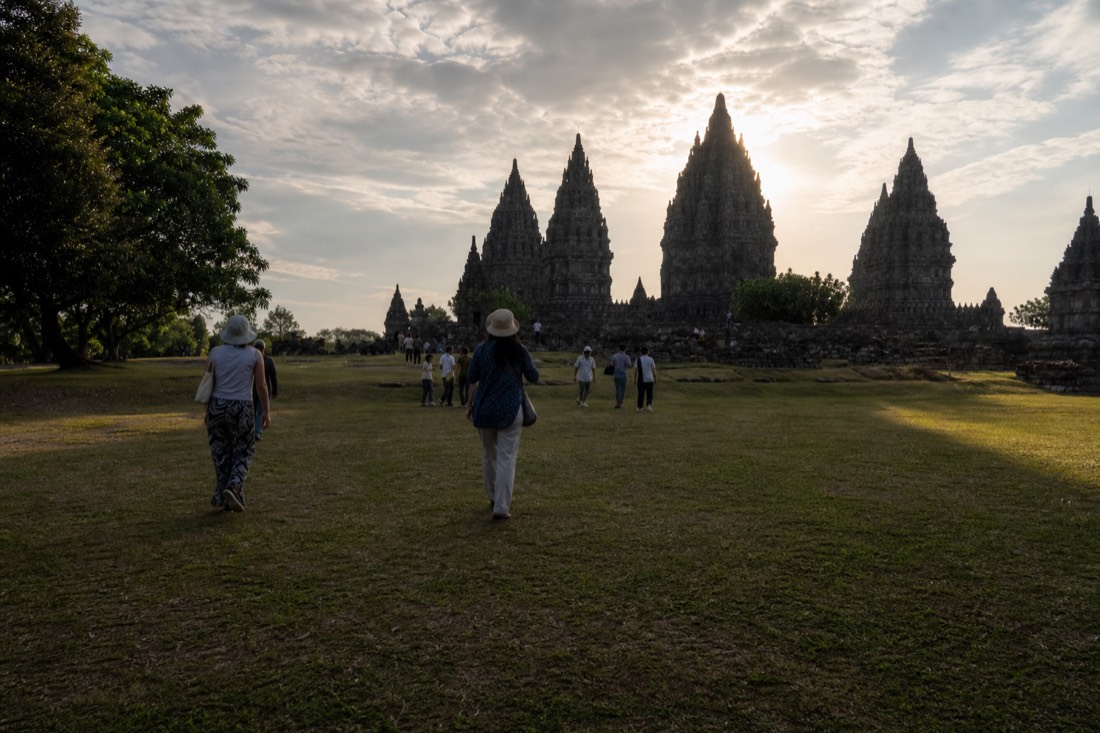
For the day that puts all three pieces together, the Sunrise, Merapi Volcano & Prambanan tour is the twelve-hour version and the one I would take if I were visiting rather than working; you can check live availability & prices on GetYourGuide for the standard climb-and-Prambanan pairing if the volcano leg is more day than you want. All of the tours we list include Prambanan, which tells you something about how inseparable the two have become. And if the combo day is already behind you, or Prambanan is the one pulling you back, it works beautifully as its own late afternoon, when the tour buses have mostly gone and the light goes gold on the spires; check the sunset tour and its dates here. That is a separate booking from the day tours above.
And if your comparison instinct is running in a bigger direction, Borobudur or Angkor Wat handles that one, and the shorter Borobudur vs Angkor Wat guide has the size claim in one table.
The group always goes quiet in the Shiva chamber. Then someone works out that the people who built this and the people who built the temple we climbed a few hours earlier, after watching the sun come up over it from Punthuk Setumbu, were near enough neighbours and contemporaries, and you can watch the day rearrange itself behind their eyes. That is worth forty kilometres of minibus.