2026-05-26
Borobudur Sunrise: Hill or Temple? The Difference Nobody Explains
Two different dawns are sold as a Borobudur sunrise. One is from Punthuk Setumbu hill, 2.5 km away. Here is what each gives you, what the mist really does, and what it costs.
 By Dewi Lestari, Borobudur temple tour guide since 2022
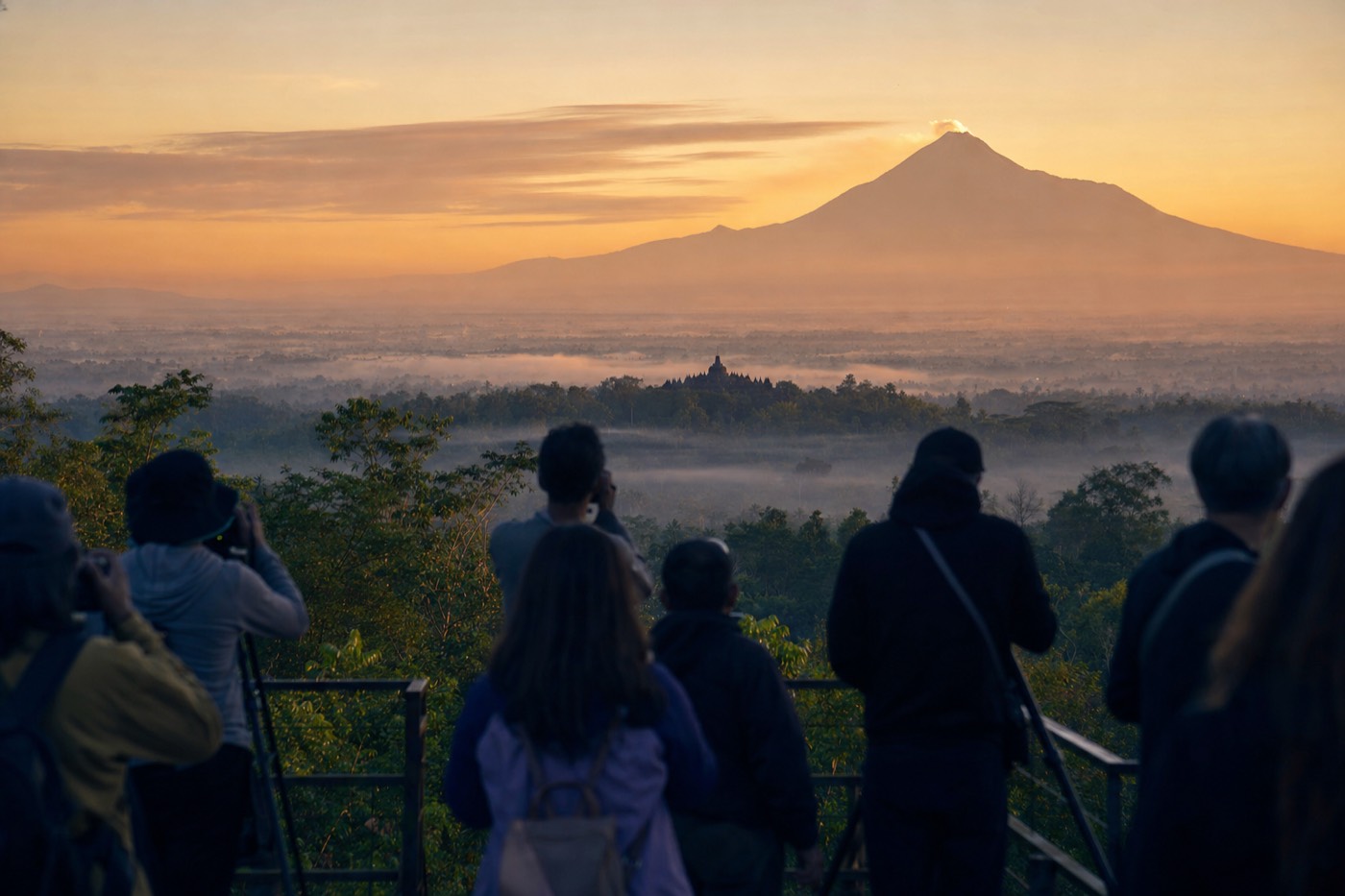
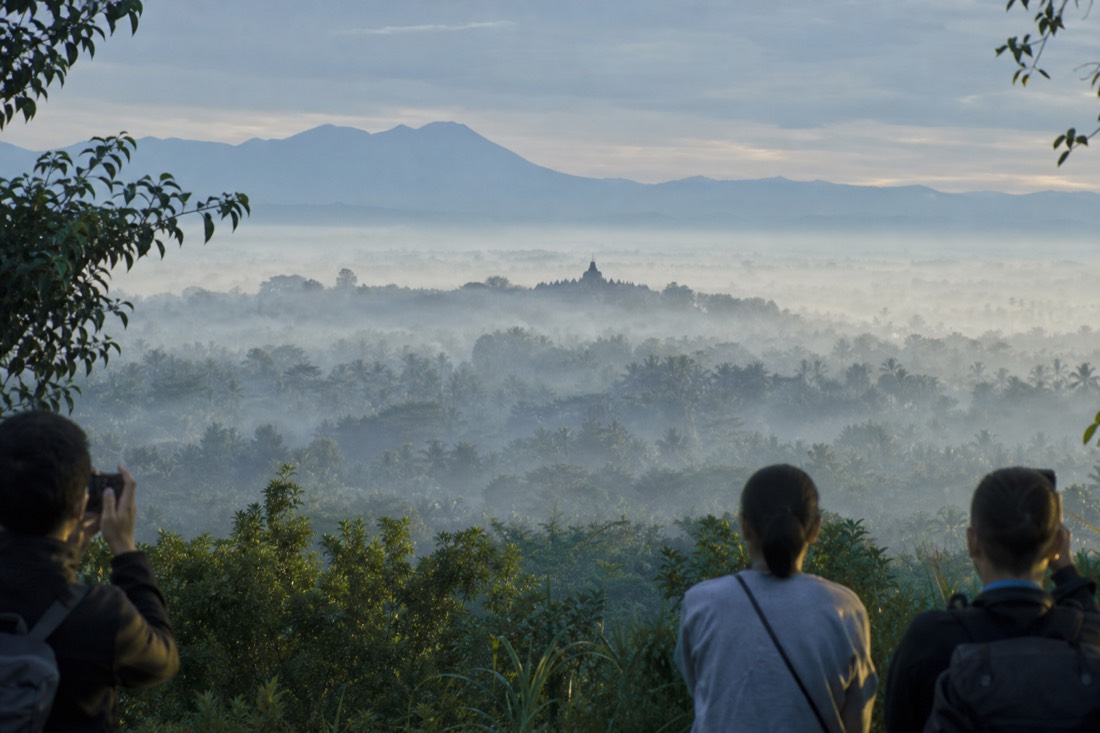
At about ten past five on a good morning, standing on a hill called Punthuk Setumbu, you watch a grey sea turn gold and a single dark shape push up through it. That shape is Borobudur, two and a half kilometres away across the plain, and the photograph you are about to take is the one you have already seen a hundred times before you ever booked anything. Here is the thing that catches people. On that morning, you are not at the temple. You are looking at it. And a lot of travellers only work that out when the sun is already up.
Two completely different experiences are sold under the same three words. Nobody explains the difference, so I will.
What does "Borobudur sunrise" actually mean?
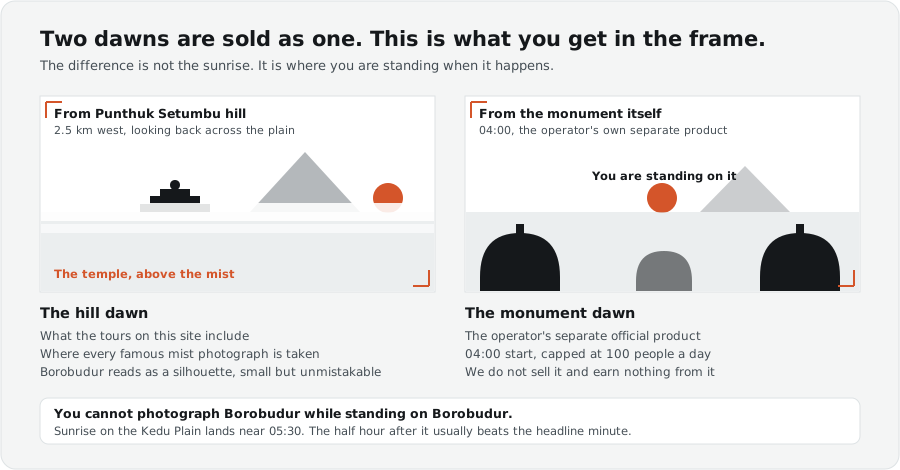
It means one of two things, and they are not close. Either you watch dawn from Punthuk Setumbu, a hill roughly 2.5 km from the monument, looking across the Kedu Plain toward it. Or you are standing on the monument itself at 04:00, which is a separate, official, far pricier product. Most tours sold as "Borobudur sunrise" are the hill.
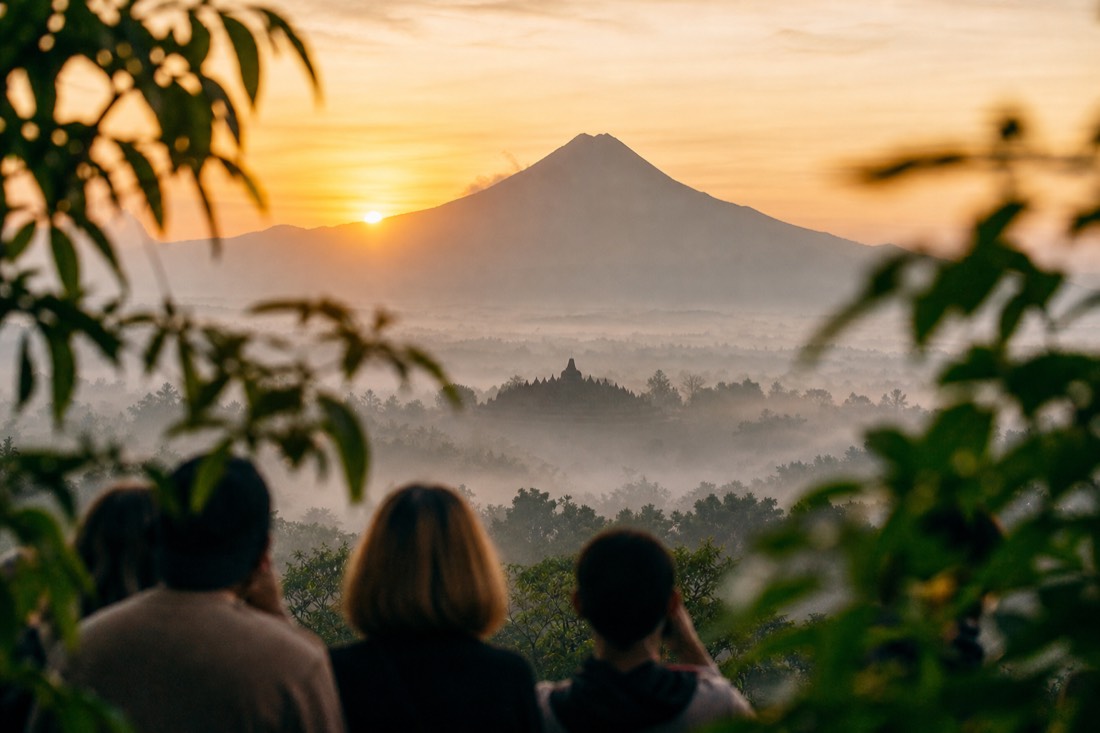
Ours included. The tours on this site deliver the dawn from Punthuk Setumbu hill, looking toward Borobudur, and not from the temple structure. I would rather you read that here than work it out in the dark at the bottom of a hill you did not expect to climb.
Neither is a con. But "sunrise at Borobudur" and "sunrise looking at Borobudur" are different sentences, and the travel industry has spent fifteen years blurring them.
Where is Punthuk Setumbu and what do you actually see?
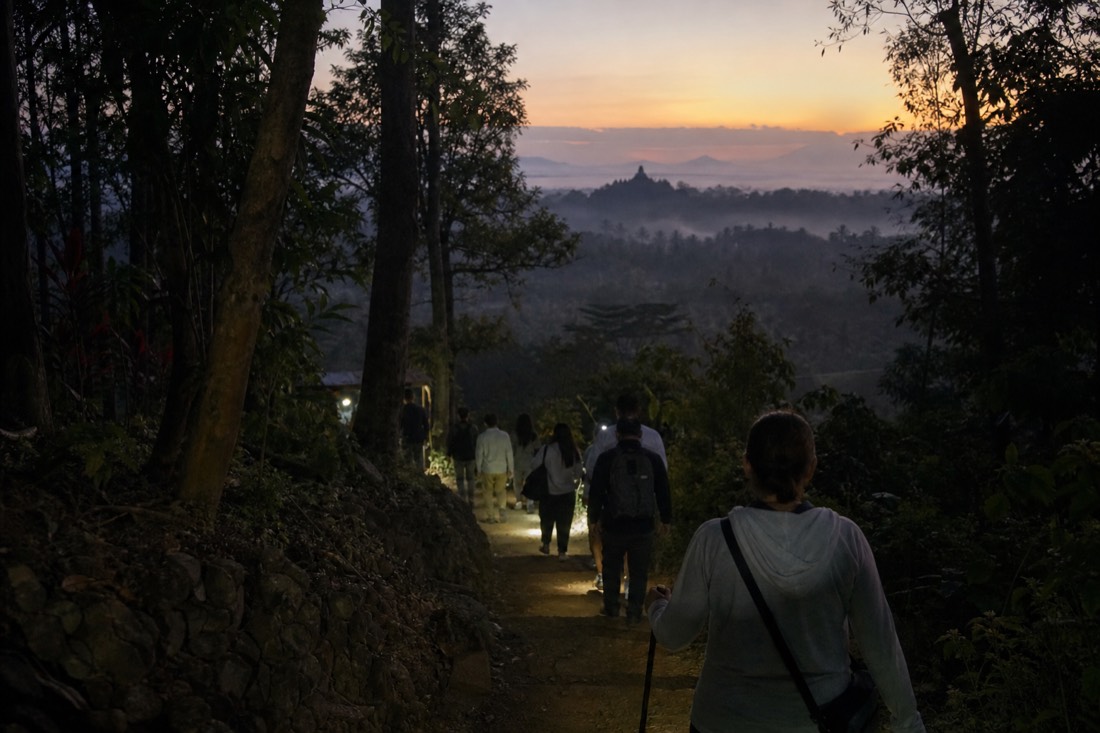
Punthuk Setumbu is a hill on the western side of the Kedu Plain, about 2.5 km from Borobudur. You climb a short forest path from the car park in the dark, come out on a viewing platform, and face east. On a good morning the temple sits above a layer of mist with Merapi behind it. That is the famous photograph, and it can only be taken from here.
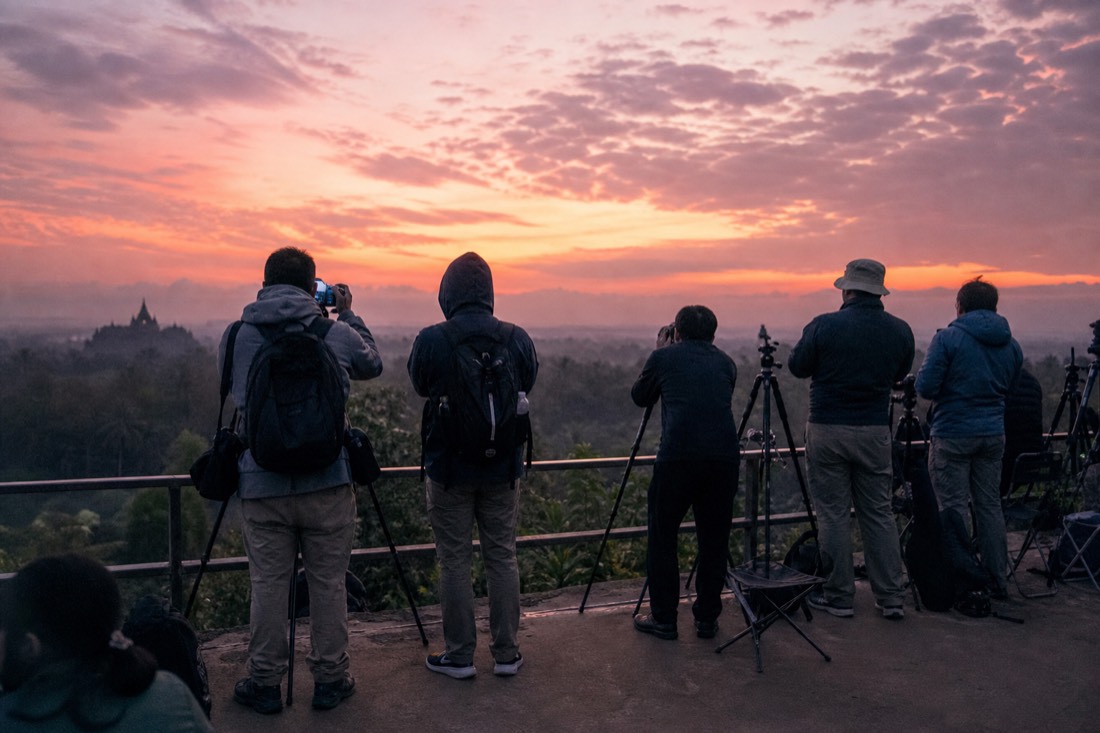
The logic is obvious once someone says it out loud, and almost nobody does: you cannot photograph Borobudur while standing on Borobudur. Every iconic image of this temple at dawn, the silhouette above the cloud, the volcano behind, was taken from a distance. Punthuk Setumbu is that distance.
What you get from the platform: the temple as a shape, small but unmistakable, the plain filling and emptying with mist, Merapi and Merbabu on the horizon, and a lot of other people with tripods. It is not a private experience. It is a good one.
Traveller reports put the hill's own gate fee at around IDR 50,000 for foreign visitors, though the temple's operator does not publish it, because Punthuk Setumbu is not theirs. On a tour it is bundled and you never see it.
Can you watch sunrise from the temple itself?
Yes, but not on our tours: the site operator sells its own official Borobudur Sunrise product at 04:00, capped at 100 people a day, at IDR 1,000,000 for international visitors and 750,000 domestic, with a flashlight, Upanat sandals, a guide and breakfast at Manohara included. It is separate from everything sold here, we earn nothing from it, and it is booked on the operator's official sunrise page.
That is the whole of it, and the reason the question needs asking is that the phrase got detached from the place years ago. "Borobudur sunrise" attached itself to the Punthuk Setumbu hill dawn because the hill is where the photographs come from, and the name stuck to the picture rather than to the ground you stand on. So the word in an itinerary that tells you what you are actually buying is Setumbu. If it is there, you are on the hill, looking across the plain at a temple you will climb later that morning.
Book the sunrise climb
Ready to book the sunrise climb?
Dawn from Punthuk Setumbu, then the Borobudur climb itself, with hotel pickup from Yogyakarta. Free cancellation up to 24 hours, reserve now and pay later: booking takes 2 minutes and costs nothing today.
Check live availability & prices →Will you actually get the mist?
Mist is weather, not a feature. Nobody can promise it and any listing that does is selling you something it does not control. It forms on cool, still, humid mornings after a wet night, which makes the shoulder of the wet season better for mist than the depths of the dry season, and the dry season better for simply seeing anything at all.
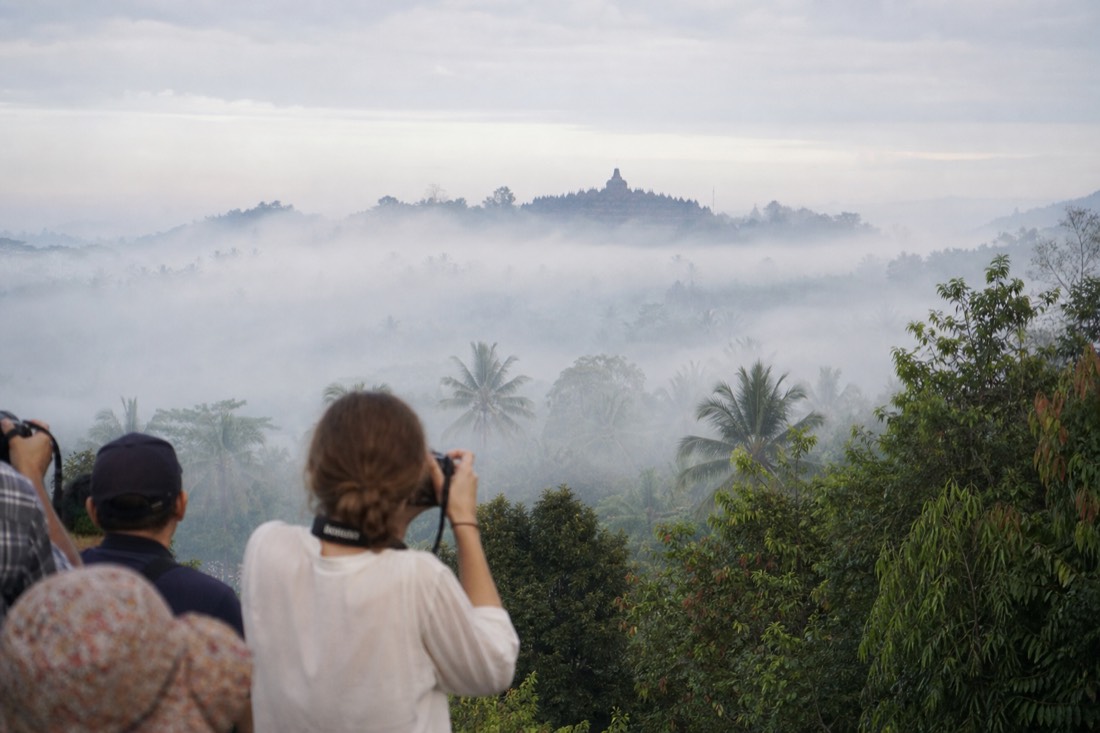
The photograph that sells the Punthuk Setumbu dawn is a photograph of a weather event. Central Java runs dry from May to October, driest in July and August, and wet from November to April, wettest between December and February. Wet-season rain mostly arrives as afternoon and evening downpours, so mornings are often clearer than the monthly rainfall figure suggests, which is the most useful thing to know about timing a visit here.
| Period | Mist odds from Punthuk Setumbu | Odds of a clear horizon | The honest trade |
|---|---|---|---|
| July to August | Lower, air is drier | Best of the year | Reliable view, less drama, most crowded |
| May to June, September to October | Moderate | Good | The balanced choice |
| November to April | Highest, especially after rain | Variable, cloud can shut it down | Best mist, real chance of nothing |
| December to February | High | Weakest | The gamble months |
You can be rained out. You can arrive to flat grey. I have stood up there with people who saw nothing at all and then had a wonderful morning at the temple two hours later, because the hill is one part of the day and not the whole of it. The best time to visit guide goes into the seasons properly.
What time does the sun rise, and when is Punthuk Setumbu at its best?
Sunrise on the Kedu Plain lands near 05:30 for most of the year, since Java sits close to the equator and the date barely moves it. Tours bound for Punthuk Setumbu leave Yogyakarta around 03:30. The half hour after sunrise usually beats the headline minute: the light warms, the mist lifts and separates, and the temple gains depth instead of being a black cut-out.
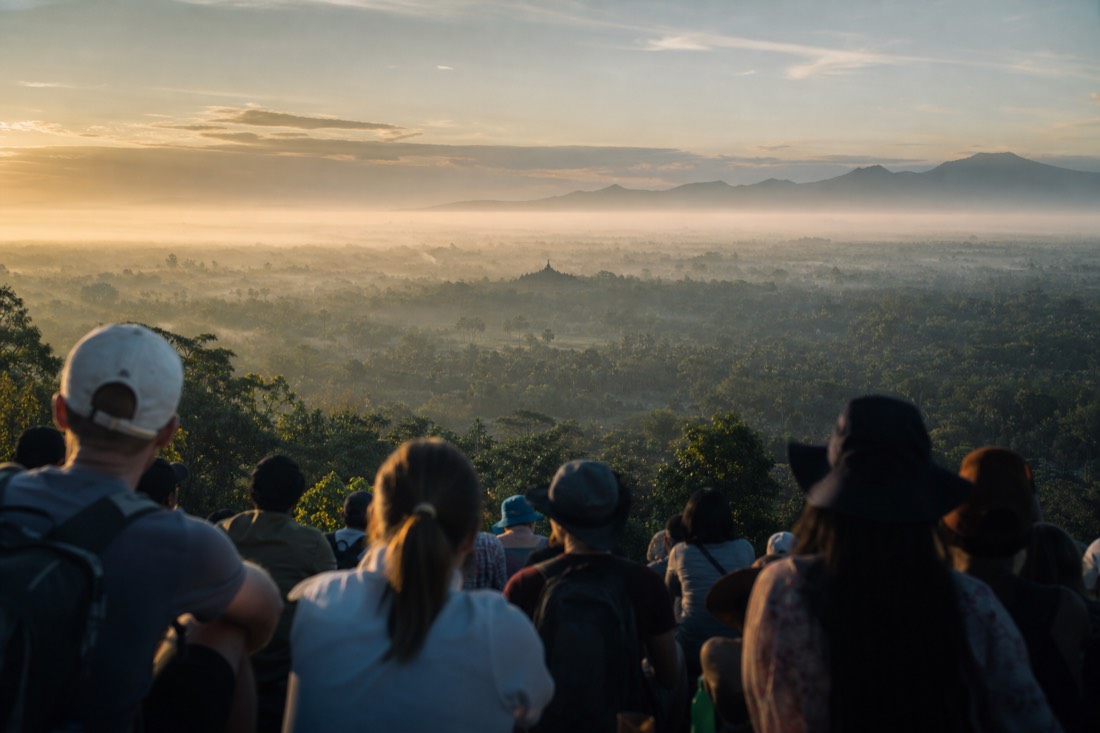
Everyone fixates on the moment the sun clears the horizon. It is often the least interesting part. At the instant of sunrise you are shooting straight into a light source and the temple is a silhouette. Fifteen minutes later the sun is high enough to rake across the plain, the mist tears into layers, and Borobudur stops being a shape and becomes a building with terraces on it.
| Time | Where you are | What is happening |
|---|---|---|
| 03:30 | Hotel pickup in Yogyakarta | The hard part of the day |
| 04:45 | Punthuk Setumbu car park | Short forest path up, in the dark, by torch |
| 05:05 | The viewing platform | Sky lightens, the plain reveals itself |
| 05:30 | Still on the platform | Sunrise. The famous silhouette minute |
| 05:45 to 06:15 | Do not leave yet | The best light. Mist lifts and layers |
| 07:00 onward | Down and on to Borobudur | Cool stone, low sun on the carvings |
The other half of that timing is what it does to the temple visit. Coming off Punthuk Setumbu you reach Borobudur early, and the structure opens at 08:30 with the stone still cool and the light still low. That is the best hour to be on the terraces, and it is a real argument for the hill dawn that has nothing to do with the hill.
Why do sunrise tours vary so much in price?
Because some are reselling a ticket you could buy directly. Resellers were found charging US$95 to US$136 for temple-sunrise access against an official ticket at roughly US$62. Hill dawns at Punthuk Setumbu are a different product with a different cost base, and comparing the two by price alone is how people end up disappointed.
If a package quotes you US$120 for "Borobudur sunrise" and the thing it is reselling costs US$62 at the counter, you are paying US$58 for a booking form. Sometimes there is a car and a driver in there and the maths is fair enough. Often there is not.
| What you are buying | Rough price | What sets it |
|---|---|---|
| Official monument dawn, bought direct | ~US$62 | Fixed by the operator, capped at 100 people daily |
| The same access via a reseller | US$95 to US$136 | The reseller's margin |
| A Punthuk Setumbu hill dawn on a full tour | Varies by tour | Transport from Yogyakarta, the hill, the climb, Prambanan |
Read the itinerary, not the title. If the word Setumbu appears anywhere in it, you are buying the hill, and that is fine as long as you know. If it promises sunrise "at" or "from" the temple for less than the official ticket costs, something is wrong with the sentence.
So which dawn should you choose?
Take the Punthuk Setumbu hill dawn if you want the famous photograph, the plain, the volcanoes and a full day that continues into the temple. Take the official monument dawn if standing among the stupas in the dark is specifically what you came for and the price is not the issue. They are not competing versions of one thing.
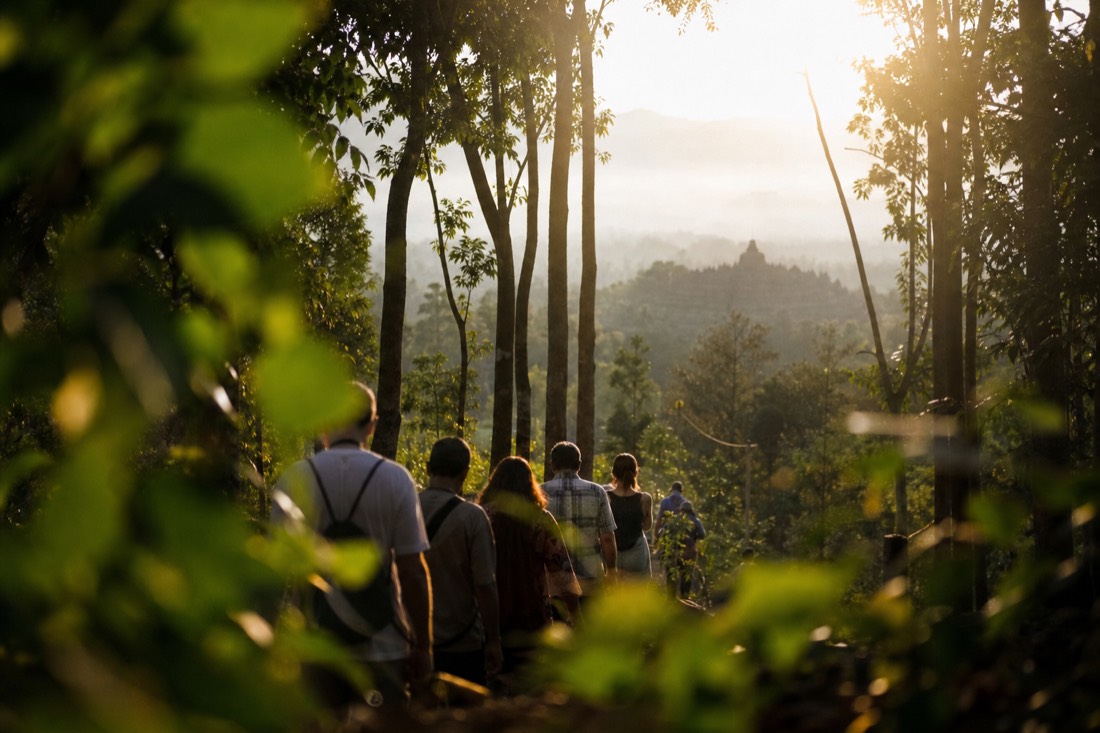
I guide both kinds of morning, and the hill dawn followed by an early climb is the better day for most people. You see the thing everyone has seen in photographs, from the only place it can be seen, and then you go and stand on it while the stone is still cool and the carvings still have shadows in them. The Borobudur Sunrise Climb & Prambanan tour is that day in order: Punthuk Setumbu for dawn, then the climb, then Prambanan in the afternoon, and you can check live availability & prices on GetYourGuide. Our sunrise guide covers the viewpoint in more depth, and the comparison page sets the tours against each other plainly.
What I would not do is book a 03:30 alarm without knowing which dawn is on the ticket. If you are bringing children, that alarm is its own conversation and the answer is often the later start. And if this is your first visit and you want the day walked through end to end, what to actually expect does exactly that, sandal swap and all. Borobudur has been standing on that plain since around 825 AD, as the UNESCO listing for the Borobudur Temple Compounds records, and it will be there whether or not the mist shows up for you.
Name the hill. Check the itinerary. Stay half an hour past the sunrise.